Visualizzazione post con etichetta Arte contemporanea. Mostra tutti i post

domenica 9 novembre 2025

FAM - FAHLANNA ART MUSEUM

[SCROLL DOWN FOR ENGLISH]


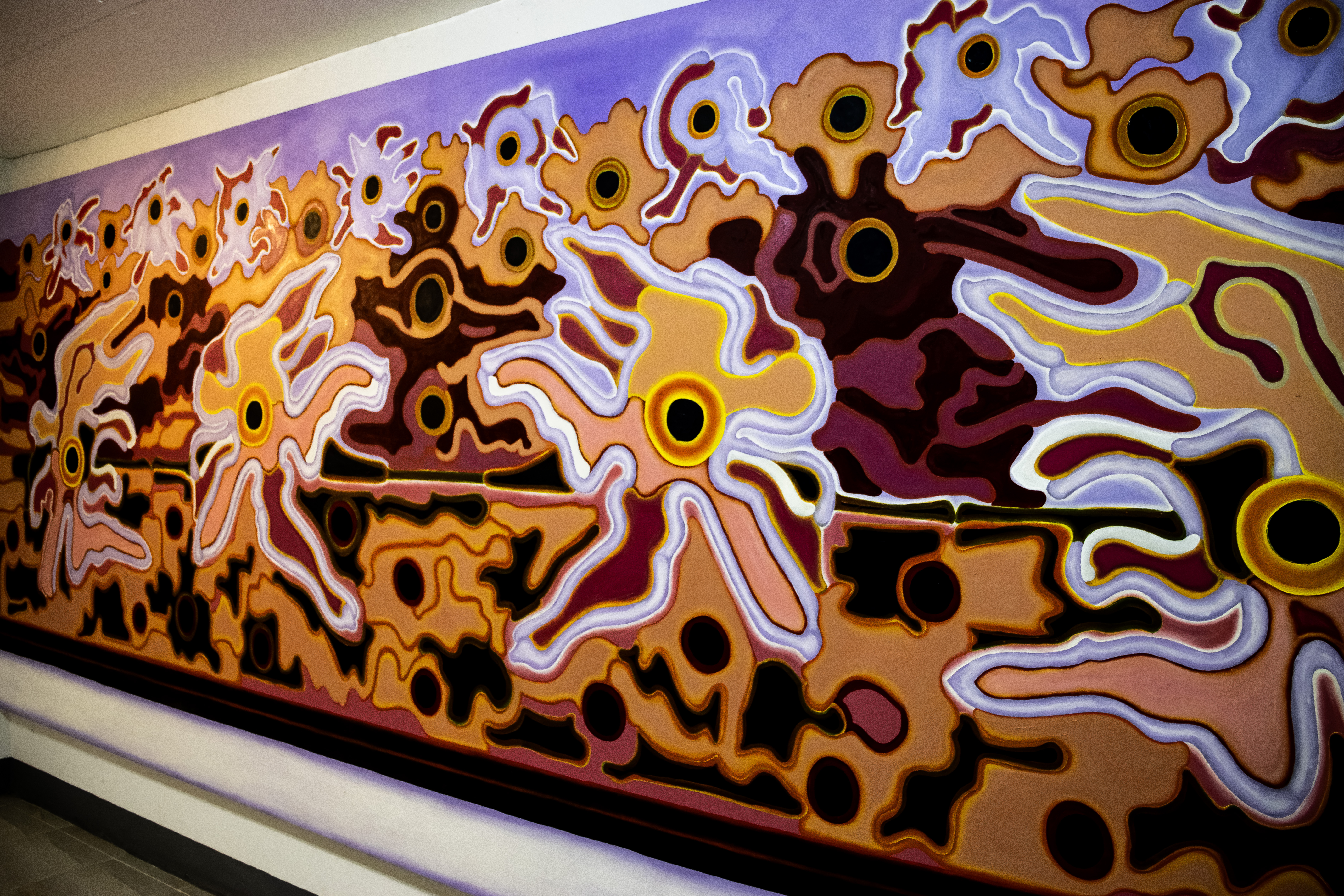
Qualche domenica fa scrollando Facebook mi sono imbattuta in un post che pubblicizzava un nuovo museo che è stato da poco inaugurato in centor a Chiang Mai: il FAM - Fahlanna Art Museum. La descrizione era abbastanza intrigante da indurmi ad andarlo a visitare nella stessa giornata. La struttura è molto grande e dotata di un ampio parcheggio. Una volta entrati e acquistato il biglietto potrete iniziare un vero viaggio nella cultura Lanna moderna e contemporanea. Le stanze si susseguono senza rispettare un ordine cronologico. 

Ogni collezione merita di essere vista, personalmente ho apprezzato molto la scultura e la pittura contemporanea.


Mentre il percorso più coinvolgente è sicuramente Infinite reflection in cui uno straordinario sistema di luci, led, laser e suoni vi avvolgerà e vi ingloberà all'interno dell'opera stessa.


Altra esperienza multimediale è nel Beyond wander, una sala di 168 mq. con proiezioni che vi avvolgeranno e vi porteranno all'interno della storia... Consiglio davvero la visita soprattutto a chi è curioso e desidera conoscere la cultura contemporanea del paese in cui ci troviamo a vivere. 


[ENGLISH VERSION]

A few Sundays ago, while scrolling through Facebook, I came across a post advertising a new museum that had recently opened in the centre of Chiang Mai: the FAM - Fahlanna Art Museum. The description was intriguing enough to tempt me to visit it that same day. The building is very large and has ample parking. Once you enter and purchase your ticket, you can begin a real journey into modern and contemporary Lanna culture. The rooms follow one another without any chronological order. Every collection is worth seeing. Personally, I really appreciated the contemporary sculpture and painting. The most engaging part of the tour is definitely Infinite Reflection, where an extraordinary system of lights, LEDs, lasers and sounds will envelop you and draw you into the work itself. Another multimedia experience is Beyond Wander, a 168 m² room with projections that will envelop you and transport you into history... I highly recommend a visit, especially for those who are curious and want to learn about the contemporary culture of the country we live in. 


domenica 22 settembre 2024

GITA A LAMPHUN: INCONTRO CON INSON WONGSAM - TRIP TO LAMPHUN: MEETING WITH INSON WONGSAM

VERSIONE AUDIO

[SCROLL DOWN FOR ENGLISH]

Domenica 15 settembre ho preso parte ad un tour a Lamphun organizzato dalla Lifelong Learning Payap University. Si è trattata di una gita davvero interessante e ricca di spunti tanto che le dedicherò due post.

In primo luogo voglio raccontarvi l'incontro con Inson Wongsam, artista nazionale thailandese, ora novantenne ma ancora in attività.  Il titolo di artista nazionale viene assegnato ogni anno dall'Ufficio della Commissione nazionale per la cultura della Thailandia, che riconosce importanti artisti thailandesi nell'area del patrimonio culturale immateriale come letteratura, belle arti, arti visive, arti applicate e arti dello spettacolo. 


L'incontro è presso la residenza museo Dhamma Park and Gallery a Lamphun, una sorta di parco costellato dalle sue sculture e da vari ambienti in cui sono esposte le sue opere.


L'appuntamento è presso la caffetteria e appena siamo entrati a colpirmi è una bellissima lambretta, decorata dall'artista, con vicino un pannello esplicativo. L'installazione ha lo scopo di celebrare il sessantesimo anniversario di uno straordinario viaggio che Inson intraprese a bordo di un antenato di questo scooter, partendo da Bangkok diretto a Firenze, attraversando paesi come il Pakistan e l'Afghanistan.

Il giovane artista voleva vedere con i suoi occhi i luoghi di origine del suo maestro Silpa Bhirasri la cui nazionalità di origine era italiana ovvero Corrado Feroci a cui ho già dedicato un post. 

Inson Wongsam è stato allievo di Feroci per molti anni e, come da lui affermato, deve tutto al grande maestro. In uno degli spazi espositivi è presente una scultura della testa del grande toscano, con fiori freschi ed incenso, ad indicare che l'omaggio è sicuramente rinnovato quotidianamente. 


Personalmente sono attratta dall'arte moderna e contemporanea ma so di non essere affatto esperta della materia. Sicuramente è stato emozionante trovarsi davanti ad un personaggio con una tale biografia. Quel viaggio infinito intrapreso nel 1963 non solo ha attraversato paesi come Afganistan, India, Pakistan, Turchia, Grecia e Italia, ma ha creato ovviamente un processo di conoscenze reciproche. Inson nel corso del viaggio continuava a produrre disegni e a venderli, arrivò a Firenze un anno e mezzo dopo la sua partenza, rimase qui tre mesi e poi si trasferì in Francia dove operò per tre anni. Dalla Francia poi intraprese il trasferimento a New York dove arrivò con un solo dollaro in tasca che evidentemente riuscì a spendere bene perchè rimase negli Stati Uniti otto anni. Una volta tornato in Thailandia si stabilì nei boschi nei pressi di Lamphun dove piantò un milione di piante di peperoncino per ricavarne un milione di baht. Ma la siccità di quell'anno fece morire tutte le piante, così Inson comprese che il suo destino era continuare a fare l'artista e non il coltivatore. 

E meno male perchè ancora oggi egli produce quadri ogni giorno, oltre agli schizzi per le sculture che vengono realizzate dai suoi collaboratori.


La filosofia di lavoro e di vita di Wongsam è ancora oggi la stessa: non smettere mai di evolversi ma  sempre fedele all'astrattismo. Come già scritto sopra non ho le competenze per una trattazione delle sue opere ma credo che anche la sua stessa vita sia di fatto arte, che si forma tramite la conoscenza, il viaggio, l'apertura ad altre culture e infine il rientro e la restituzione al suo luogo di origine. Inson Wongsam vive nei pressi di Lamphun e il Dharma Park and Inson Wongsam Art Gallery è aperto al pubblico. Nel parco ha collocato alcune sculture che aveva realizzato cinquanta anni fa per un progetto visionario che ne prevedeva la collocazione sott'acqua in una mostra visitabile con attività subacquea. Lo scopo era denunciare il riscaldamento climatico ma il progetto fu considerato irrealizzabile. 


In conclusione desidero ringraziare LIFELONG LEARNING PAYAP per l'iniziativa e invito a visitare il loro sito per conoscere tutte le attività in corso.

[ENGLISH VERSION]

On Sunday 15 September, I took part in a tour to Lamphun organised by Lifelong Learning Payap University. It was such an interesting and informative trip that I will dedicate two posts to it.

First, I want to tell you about my meeting with Inson Wongsam, a Thai national artist, now in his 90s but still active.  The title of national artist is awarded annually by the Office of the National Cultural Commission of Thailand, which recognises important Thai artists in the area of intangible cultural heritage such as literature, fine arts, visual arts, applied arts and performing arts. 

The meeting is at the Dhamma Park and Gallery museum residence in Lamphun, a kind of park dotted with his sculptures and various rooms displaying his works. The meeting is at the cafeteria and as soon as we enter, what strikes me is a beautiful lambretta, decorated by the artist, with an explanatory panel next to it. The purpose of the installation is to celebrate the 60th anniversary of an extraordinary journey that Inson undertook on board an ancestor of this scooter, leaving Bangkok on his way to Florence, passing through countries such as Pakistan and Afghanistan. The young artist wanted to see with his own eyes the places of origin of his master Silpa Bhirasri whose nationality of origin was Italian, namely Corrado Feroci to whom I have already dedicated a post. 

Inson Wongsam was a pupil of Feroci's for many years and, as he says, owes everything to the great master. In one of the exhibition spaces there is a sculpture of the great Tuscan's head, with fresh flowers and incense, indicating that the homage is certainly renewed daily. 

Personally, I am attracted to modern and contemporary art, but I know that I am by no means an expert on the subject. It was certainly exciting to be in front of a character with such a biography. That endless journey he undertook in 1963 not only passed through countries like Afghanistan, India, Pakistan, Turkey, Greece and Italy, but obviously created a process of mutual acquaintances. While travelling, Inson continued to produce drawings and sell them, arrived in Florence a year and a half after his departure, stayed here three months and then moved to France where he worked for three years. From France he then moved to New York where he arrived with only one dollar in his pocket which he evidently managed to spend well because he stayed in the United States for eight years. Once back in Thailand, he settled in the woods near Lamphun where he planted a million chilli plants in order to earn a million baht. But the drought that year caused all the plants to die, so Inson realised that his destiny was to continue being an artist and not a farmer. 

And thank goodness, because to this day he still produces paintings every day, as well as sketches for the sculptures that are made by his collaborators.

Wongsam's philosophy of work and life is still the same today: never stop evolving but always faithful to abstract art. As already written above, I do not have the expertise for a discussion of his works, but I believe that his life itself is in fact art, which is formed through knowledge, travel, opening up to other cultures and finally returning to its place of origin. Inson Wongsam lives near Lamphun and the Dharma Park and Inson Wongsam Art Gallery is open to the public. In the park, he has placed some sculptures he made fifty years ago for a visionary project that involved placing them underwater in an exhibition that could be visited with underwater activities. The aim was to denounce global warming but the project was considered unfeasible.

In conclusion, I would like to thank LIFELONG LEARNING PAYAP for the initiative and invite you to visit their website to learn about all their ongoing activities.

lunedì 12 aprile 2021

HORROR VACUI DELLA VERITÀ - TRUTH'S HORROR VACUI


[SCROLL FOR ENGLISH]

 ...ci sono luoghi, anche qui in Thailandia, in cui non vorrei mai andare per svariati motivi, uno di questi è Pattaya, la cui storia moderna è strettamente connessa allo sviluppo della prostituzione di questo paese. Un posto di mare dove l'ultimo motivo di attrazione è il mare, personalmente non è il posto dove vorrei andare in vacanza. 

Però succede che da qualche anno a Pattaya è visitabile una straordinaria installazione di arte contemporanea, la cui costruzione è iniziata nel 1981 ma non è ancora conclusa e forse non lo sarà mai. 

Il titolo dell'opera è Sanctuary of truth, ปราสาทสัจธรรม (Prasat Satchatham) realizzato da una idea di Lek Viriyaphan, un ricco uomo di affari, già promotore di progetti visionari come Muang Boran e Erawan Museum a Bangkok.

La costruzione richiama nello stile l'architettura religiosa tradizionale, ma in realtà segue altri canoni ed è realizzata completamente in legno, teak per la precisione e senza l'utilizzo di chiodi, solo di varie tipologie di incastri. I chiodi in realtà vengono utilizzati in alcune situazioni ma solo finché l'incastronon si è posizionato a dovere, dopo di che vengono rimossi.


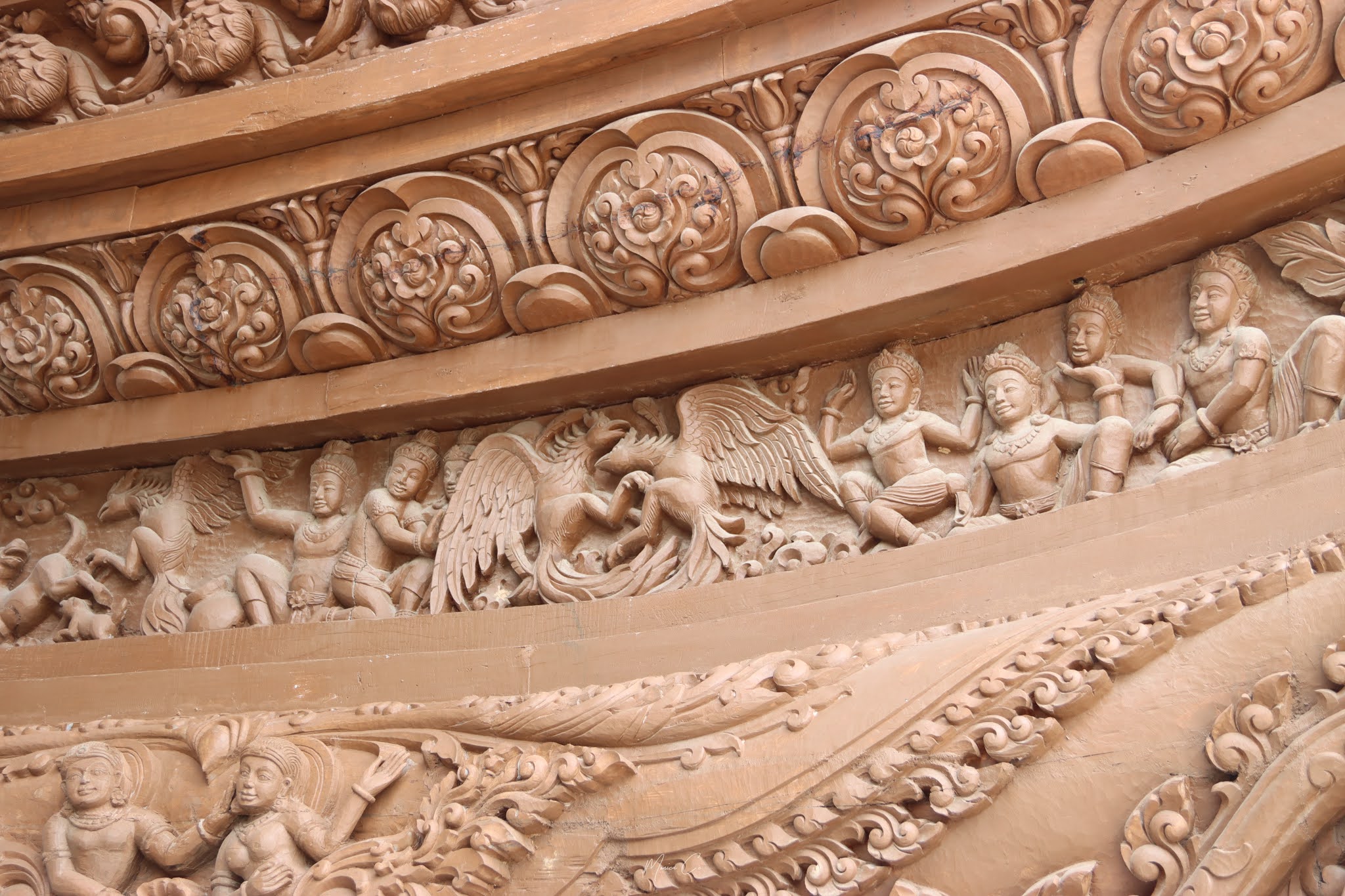
L'idea di fondo da cui prende vita il progetto è mostrare che tutte le religioni portano all'unica verità, la decorazione del santuario sottolinea l'importanza delle filosofie religiose, in quanto esse contribuiscono alla stabilità del mondo insegnando alle persone ad evitare le intenzioni malvagie e promuovendo le buone azioni. Le diverse parti della costruzione sono ispirate alle diverse tradizioni artistiche e alle mitologie di Thailandia, Cambogia, Cina e India, in pratica sembra la sintesi artistica di quella ibridizzazione culturale teorizzata dall'antropologo Pattana Kitiarsa. Il risultato è una straordinaria opera d'arte alta 105 metri, costellata da centinaia e centinaia di personaggi e scene della tradizione religiosa e popolare del sud est asiatico. La pianta dell'edificio è a croce con i bracci di uguale lunghezza, la posizione rispetto al nord geografico è quella di una X. 

Il santuario indica la "verità", proponendo l'idea che la civiltà nasce da una combinazione di filosofie e religioni, e che la moralità del mondo deriva da queste idee filosofiche e religiose insieme all'arte. Il Santuario della Verità mira a riallineare la morale e i valori tradizionali e a promuovere la pace e l'armonia.

Secondo il suo progettista ci sono sette creatori: Cielo, Terra, Padre, Madre, Sole, Luna e Stelle. Ogni tema è rappresentato in tutto l'edificio. Le credenze orientali riconoscono spesso quattro componenti di una vita ideale: religione, filosofia, pace e vita reale. Volgendo lo sguardo verso il cielo si possono vedere queste idee rappresentate in cima alle guglie allungate.

Per raggiungere la perfezione di vita, gli uomini devono superare varie sfide, come le lotte tra il bene e il male, la devozione spirituale, le guerre globali, il crescente materialismo e l'abbandono della natura. Queste prove della vita sono illustrate attraverso la riproduzione di scene del Ramayana e del Mahabharata, due importanti racconti della tradizione orientale.


Ogni lato ha un suo portale ispirato appunto a diverse tradizioni, il più spettacolare è quello che riprende lo stile khmer della decorazione dei templi di Angkor wat. 


Per quanto ci si possa soffermare ad osservare i dettagli è praticamente impossibile memorizzare tutte le immagini, i personaggi, le scene riprodotte, come se l'opera in costante perfezionamento nella sua incompiutezza trasmettesse all'osservatore la consapevolezza dei suoi limiti e del limite del suo sguardo. 

In cima alla guglia più alta è collocato Phra Sri Ariya Metrai a cavallo, si tratta dell'ultima persona a raggiungere l'illuminazione e a diventare un Buddha nell'era attuale. Secondo la tradizione indù, si ritiene che si tratti di Vishnu che apparirà per porre fine al tempo presente e iniziare una nuova era.


L'interno dell'edificio, ancora largamente incompleto presenta quattro grandi sale decorate da bassorilievi alle pareti e statue. Il centro circolare ospita un reliquiario, e non è inusuale che le persone si fermino a pregare e a lasciare delle offerte, anche se non si tratta di un tempio.


Per agevolare la visita vengono organizzate delle visite guidate che si concludono nell'atrio dedicato alla famiglia ricordando la gratitudine che si deve avere per questa istituzione, basata sull'amore reciproco e la cura dell'altro.


Nello stesso ambiente sono conservate le immagini di Lek Viriyaphan e di sua moglie.


A livello personale sono ovviamente affascinata da tanta maestria artistica e abilità nella lavorazione del legno.

Non sono una esperta di arte contemporanea, quello che mi lascia perplessa è questa sorta di eccesso decorativo, a fronte di altre correnti contemporanee minimaliste o astrattiste sia locali sia internazionali. Sia il santuario della verità sia il tempio bianco di Chiang Rai sono installazioni artistiche accomunate dallo stesso horror vacui che mi appare simile al barocco italiano, pur ammirandone la spettacolarità rimango in dubbio sulla necessità di una tale produzione, più per il santuario della verità che per il tempio bianco... 
Sono comunque due opere che devono essere viste con i propri occhi perché qualsiasi descrizione non può essere sufficientemente esaustiva.


[ENGLISH VERSION]

 ...there are places, even here in Thailand, where I would never want to go for a variety of reasons, one of which is Pattaya, whose modern history is closely linked to the development of prostitution in this country. A place by the sea where the last reason for attraction is the sea, personally is not the place where I would like to go on holiday. 

It happens, however, that for some years now an extraordinary installation of contemporary art has been open to visitors in Pattaya, the construction of which began in 1981 but has not yet been completed and perhaps never will be. 

The title of the work is Sanctuary of truth, ปราสาทสัจธรรม (Prasat Satchatham), the brainchild of Lek Viriyaphan, a wealthy businessman who has already promoted visionary projects such as Muang Boran and the Erawan Museum in Bangkok.

The building is reminiscent of traditional religious architecture in style, but actually follows other canons and is made entirely of wood, teak to be precise, without the use of nails, just various types of joints. The nails are actually used in some situations but only until the joint is properly positioned, after which they are removed.

The basic idea behind the project is to show that all religions lead to the one truth, and the decoration of the sanctuary underlines the importance of religious philosophies, as they contribute to the stability of the world by teaching people to avoid evil intentions and promoting good deeds. The different parts of the construction are inspired by the different artistic traditions and mythologies of Thailand, Cambodia, China and India, in practice seeming to be the artistic synthesis of that cultural hybridisation theorised by the anthropologist Pattana Kitiarsa. The result is an extraordinary 105 metre high masterpiece, studded with hundreds and hundreds of characters and scenes from the religious and popular traditions of Southeast Asia. The plan of the building is in the shape of a cross with arms of equal length, its position relative to the geographical north is that of an X. 

The shrine stands for 'truth', proposing the idea that civilisation arises from a combination of philosophies and religions, and that the morality of the world derives from these philosophical and religious ideas together with art. The Shrine of Truth aims to realign morality and traditional values and to promote peace and harmony.

According to its designer there are seven creators: Heaven, Earth, Father, Mother, Sun, Moon and Stars. Each theme is represented throughout the building. Eastern beliefs often recognise four components of an ideal life: religion, philosophy, peace and real life. Looking up into the sky, one can see these ideas represented atop the elongated spires.

To achieve perfection in life, humans have to overcome various challenges, such as struggles between good and evil, spiritual devotion, global wars, increasing materialism and neglect of nature. These trials of life are illustrated through the reproduction of scenes from the Ramayana and the Mahabharata, two important tales of Eastern tradition.

Each side has its own portal inspired by different traditions, the most spectacular being the one that echoes the Khmer style of decoration in the temples of Angkor wat. 

No matter how much you look at the details, it is practically impossible to memorise all the images, characters and scenes reproduced, as if the opera, which is constantly being perfected in its incompleteness, is transmitting to the observer an awareness of its limits and the limits of his gaze. 

At the top of the highest spire stands Phra Sri Ariya Metrai on horseback, the last person to achieve enlightenment and become a Buddha in the present era. According to Hindu tradition, he is believed to be Vishnu who will appear to end the present time and begin a new era.

The interior of the building, still largely unfinished, has four large rooms decorated with bas-reliefs on the walls and statues. The circular centre houses a reliquary, and it is not unusual for people to stop and pray and leave offerings, even though it is not a temple.

To facilitate the visit, guided tours are organised, ending in the family atrium, recalling the gratitude one must have for this institution, based on mutual love and care for one another.

Images of Lek Viriyaphan and his wife are kept in the same room.

On a more personal level, I am obviously fascinated by such artistry and woodworking skills.

I am not an expert in contemporary art, but what puzzles me is this sort of decorative excess, compared with other contemporary minimalist or abstract currents, both local and international. Both the Sanctuary of Truth and the White Temple in Chiang Rai are art installations which share the same horror vacui, which seems to me similar to Italian Baroque. While admiring their spectacularity, I remain in doubt about the need for such a production, more so for the Sanctuary of Truth than for the White Temple... 
In any case, these are two masterpieces that must be seen with one's own eyes because any description cannot be sufficiently exhaustive.

sabato 14 marzo 2020

Corrado Feroci - Silpa Bhirasri

SCROLL DOWN FOR ENGLISH

In queste giornate in cui l'inquinamento da pm2.5 è alle stelle non sto uscendo o esplorando come prima. Ne approfitto per raccontarvi la storia dell'uomo che ha fondato l'arte moderna thailandese.

Si racconta che molti thai, in particolare gli studenti della Università di Belle Arti di Bangkok, in visita a Firenze prima di andare a vedere gli Uffizi si rechino al Cimitero degli Allori per rendere omaggio al fondatore dell'arte moderna thailandese, Silpa Bhirasri.
Foto di Elisa Rolle - Opera propria, CC BY-SA 4.0,
https://commons.wikimedia.org/w/index.php?curid=57791613
Immagino che alcuni tra voi lettori si chiederanno come mai questo illustre personaggio abbia trovato la propria dimora eterna sul suolo italiano. La risposta è semplice perchè si tratta di un italiano, Corrado Feroci, che dopo aver a lungo operato e insegnato in Thailandia ne acquisì la cittadinanza cambiando anche il proprio nome.

Sicuramente Corrado Feroci era dotato di un grande carisma e capacità didattiche, fondo' l'Università di Belle Arti di Bangkok e una statua che lo raffigura è collocata all'ingresso, opera di uno dei suoi allievi preferiti. Prima di un esame gli studenti sono soliti rendergli omaggio. 
Foto di ScorpianPK -
Opera propria, CC BY-SA 3.0,
https://commons.wikimedia.org/w/index.php?curid=4329786

Non ho le competenze per addentrarmi nel racconto della sua arte, voglio solo accennare alla sua biografia, una vita straordinaria.
Feroci si trasferisce nell'allora Regno del Siam nel 1924 dopo aver vinto un concorso come "medaglista" addetto alla monetazione nazionale del Siam. Si racconta che gli inizi non furono semplici,  si scontro' con gli schematismi che non riguardavano solo la persona ma anche il concetto stesso di arte, soggetta a canoni consolidati da secoli. La svolta arrivo' quando il principe Naris, zio dell'allora sovrano, lo prese sotto la sua protezione e gli commisiono' la realizzazione di un busto. In questo modo inizia la serie di statue reali che ancora possiamo ammirare a Bangkok: re Taksin, Rama I, Rama V e Rama VI, quest'ultima collocata all'ingresso del Lumphini Park. 
Statua di Rama VI

Nel 1934, a dieci anni esatti dal suo trasferimento in Thailandia, fonda la Scuola di Belle Arti di cui diventa docente e amministratore. Gli studenti sono sette, tra cui Fua Haripithak, Phimarn Moonpramook e Sittideth Saenghiran che saranno poi i protagonisti della scena artistica thailandese. Per un insegnante direi si tratti di un ottimo risultato... Il maggior pregio del suo metodo educativo fu l'abilità di far emergere la capacità creativa dei suoi allievi, indicando loro nuove strade da percorrere. I suoi studenti lo adorano e lui, nonostante la gloria, conduce una vita spartana, non essendosi arricchito assolutamente, tanto che i suoi allievi gli portano regolarmente del cibo. Il suo studio è oggi un museo e appare di stile monacale. 

E' importante anche la sua produzione di saggi fondamentali per l'arte thailandese: "Teoria dei colori", "Teoria della composizione", "Manuale di lessico artistico anglo-siamese", "Arte e cultura", "E' necessaria l'arte?", "Estremismi nell'arte" e "Nudo artistico" per citarne alcuni. 

Tra la fine degli anni '30 e l'inizio dei '40 realizza i monumenti alla Vittoria e alla Democrazia a Bangkok e una grandiosa scultura raffigurante Buddha a Nakhon Pathom. 
Democracy monument

Durante la seconda guerra mondiale il Giappone di fatto occupo' la Thailandia, che a quel punto si schiero' al suo fianco dichiarando guerra agli Stati Uniti. A seguito dell'armistizio dell'8 settembre, con cui l'Italia rompe l'alleanza con i giapponesi, Feroci viene arrestato. Il governo thailandese a questo punto offre all'illustre artista la cittadinanza in modo di non essere più considerato un esponente di un paese ostile. Così l'italiano Corrado Feroci diventa Silpa Bhirasri, dopo alcuni mesi di detenzione viene liberato nel 1944.

Uno dei suoi obiettivi era l'acquisizione di un linguaggio universale che fosse sintesi del significato più profondo dei capolavori delle diverse culture nazionali,  per sviluppare una nuova coscienza e una nuova arte al di là dei confini e delle ideologie.
«Tutti noi che siamo partecipi dello stesso universo spirituale, quando osserviamo un'opera d' arte in sintonia col nucleo dell'universo, anche noi a nostra volta ne entreremo in contatto e proveremo emozioni uguali senza avvertire la distanza di culture di paesi diversi» 
Nel 1949 si decise a rientrare a Firenze a causa delle condizioni economiche in cui si trovava. Ma resistette pochi mesi e appena il governo thailandese gli offrì uno stipendio più alto torno' a Bangkok e riprese l'insegnamento. In questi anni si fa promotore degli artisti suoi allievi sulla scena internazionale, anche grazie all'ingresso della Thailandia nell'UNESCO nel 1953 e porta le loro opere alla Tate Gallery di Londra e poi a Tokyo e New York dove ottengono riconoscimenti.

Tiziano Terzani racconta che negli ultimi anni le sue lezioni erano frequentatissime da studenti che vi partecipavano come ad una sorta di rito, rendendo omaggio al suo fascino. Sembra infatti che Silpa Bhirasri parlasse un thai grammaticalmente perfetto ma, non avendo mai perso le caratteristiche fonetiche del toscano, risultava del tutto incomprensibile. 

Credits: "Italians at the court og Siam", Piazzardi P., Beni di Betasiolo

ENGLISH VERSION

 On these days when pm2.5 pollution is skyrocketing I'm not going out or exploring like before. I take this opportunity to tell you the story of the man who founded modern Thai art.

It is said that many Thai people, especially students of the University of Fine Arts in Bangkok, visiting Florence before going to see the Uffizi go to the Cemetery of Allori to pay homage to the founder of modern Thai art, Silpa Bhirasri.

I imagine some of you readers will wonder how this illustrious personage found his eternal home on Italian soil. The answer is simple because he is an Italian, Corrado Feroci, who after a long time working and teaching in Thailand acquired his citizenship and changed his name.

Certainly Corrado Feroci was endowed with a great charisma and teaching skills, he founded the University of Fine Arts in Bangkok and a statue depicting him is placed at the entrance, the work of one of his most favourite students. Before an exam, students are used to pay homage to him.

I don't have the skills to go into the narration of his art, I just want to mention his biography, an extraordinary life.

Feroci moved to the then Kingdom of Siam in 1924 after winning a competition as a "medallist" for the national coinage of Siam. It is said that the beginnings were not simple, he clashed with the schematism that did not concern only the person but also the very concept of art, subject to canons consolidated for centuries. The turning point came when Prince Naris, uncle of the then sovereign, took him under his protection and commissioned him to make a bust. In this way begins the series of royal statues that we can still admire in Bangkok: King Taksin, Rama I, Rama V and Rama VI, the latter located at the entrance of Lumphini Park.

In 1934, exactly ten years after he moved to Thailand, he founded the School of Fine Arts of which he became lecturer and administrator. There are seven students, including Fua Haripithak, Phimarn Moonpramook and Sittideth Saenghiran, who will later become the protagonists of the Thai art scene. For a teacher I'd say this is a very good result... The greatest quality of his educational method was the ability to bring out the creative capacity of his students, showing them new paths to take. His students adore him and, despite his glory, he leads a Spartan life, not having become so rich that his students regularly bring him food. His studio is now a museum and appears in monastic style.

His production of essays fundamental to Thai art is also important: "Theory of Colours", "Theory of Composition", "Handbook of Anglo-Syamese Art Lexicon", "Art and Culture", "Is Art Necessary?", "Extremism in Art" and "Artistic Nude" to name a few.

Between the end of the '30s and the beginning of the '40s he created the monuments to Victory and Democracy in Bangkok and a grandiose sculpture depicting Buddha in Nakhon Pathom.

During the Second World War Japan actually occupied Thailand, which then sided with it and declared war on the United States. Following the armistice of 8 September, with which Italy broke its alliance with the Japanese, Feroci was arrested. The Thai government at this point offers the illustrious artist citizenship so that he is no longer considered an exponent of a hostile country. So the Italian Corrado Feroci becomes Silpa Bhirasri, after a few months of detention he is released in 1944.

One of his objectives was the acquisition of a universal language that was a synthesis of the deepest meaning of the masterpieces of different national cultures, to develop a new consciousness and a new art beyond borders and ideologies.

"All of us who are part of the same spiritual universe, when we observe a work of art in tune with the core of the universe, we too will come into contact with it and feel the same emotions without feeling the distance of cultures from different countries". 

In 1949 he decided to return to Florence because of the economic conditions in which he found himself. But he only lasted a few months and as soon as the Thai government offered him a higher salary he returned to Bangkok and resumed teaching. In these years he promoted his students' artists on the international scene, also thanks to Thailand's entry into UNESCO in 1953 and brought their works to the Tate Gallery in London and then to Tokyo and New York where they won awards.

Tiziano Terzani tells that in the last few years his lectures were attended by students who participated in them as a sort of ritual, paying homage to his charm. In fact, it seems that Silpa Bhirasri spoke perfect Thai grammar but, having never lost the phonetic characteristics of Tuscan, it was completely incomprehensible.

mercoledì 15 maggio 2019

MUSEO DI ARTE CONTEMPORANEA - MAIIAM - Chiang Mai


[SCROLL DOWN FOR ENGLISH}

Chiang Mai è una città molto vivace dal punto di vista culturale, tanto da meritare il titolo di "Città creativa" da parte dell'UNESCO.

Uno dei volani più importanti per il conseguimento di questo titolo è stata sicuramente l'apertura del "MAIIAM - Museo di arte contemporanea" dove si svolgono mostre temporanee oltre ad ospitare in esposizione permanente la collezione privata della famiglia Bunnag-Beurdeley che sul sito riferisce il loro criterio di selezione delle opere collezionate "La nostra collezione non rappresenta in alcun modo l'intera storia dell'arte contemporanea tailandese, ma solo il nostro punto di vista, basato sul solo criterio della risposta emotiva che le opere ci danno. Credo che un'opera d'arte esista come risultato della creatività dell'artista, ma anche nella risposta emotiva che produce nello spettatore"

In ogni caso sono presenti opere dei più importanti artisti contemporanei, alcuni noti anche a livello internazionale come Apichatpong Weerasetthakul, vincitore della Palma d'Oro a Cannes nel 2010.

Ho visitato due volte il  "MAIIAM - Museo di arte contemporanea", la prima volta in occasione dell'inaugurazione e in seguito diversi mesi dopo. La struttura che ospita il museo è una riconversione di un magazzino di oltre 3000mq.
La caratteristica più originale è la facciata completamente ricoperta di di piccole tessere a specchio, reinterpretando una modalità utilizzata anche in alcuni templi della città. L'effetto è molto interessante perchè a seconda della prospettiva tale soluzione mimetizza l'edificio con il paesaggio circostante oppure risulta essere fortemente impattante rispetto al resto.

In base al criterio della risposta emotiva le opere che ho maggiormente apprezzato sono quelle di
Apichatpong Weerasetthakul, del quale ho  apprezzato anche tutti i suoi film.
Altra opera davvero emozionante è un enorme trittico di Navin Rawanchaikul dal titolo "Super(M)art Bangkok survivor"
Opera fortemente critica del mercato dell'arte locale e della società thailandese, con alcuni dettagli che definirei disturbanti e per questo motivo rendono l'opera ai miei occhi assolutamente imperdibile...


[ENGLISH VERSION}
Chiang Mai is a very lively city from a cultural point of view, so much so that it has been awarded the title of 'Creative City' by UNESCO.

One of the most important factors in achieving this title was undoubtedly the opening of the "MAIIAM - Museum of Contemporary Art", which hosts temporary exhibitions as well as a permanent exhibition of the Bunnag-Beurdeley family's private collection. On their website, the Bunnag-Beurdeley family explains their criteria for selecting the works they collect: "Our collection in no way represents the entire history of Thai contemporary art, but only our point of view, based on the sole criterion of the emotional response that the works give us. I believe that a work of art exists as a result of the artist's creativity, but also in the emotional response it produces in the viewer."

In any case, there are works by the most important contemporary artists, some of them internationally known, such as Apichatpong Weerasetthakul, winner of the Palme d'Or at Cannes in 2010.

I visited the 'MAIIAM - Museum of Contemporary Art' twice, the first time at the opening and then several months later. The structure that houses the museum is a conversion of a warehouse of over 3000 square metres.

The most original feature is the façade completely covered with small mirrored tiles, reinterpreting a method also used in some of the city's temples. The effect is very interesting because, depending on the perspective, this solution either blends the building into the surrounding landscape or makes a strong impact on the rest of it.

On the basis of the criterion of emotional response, the works I have most appreciated are those of Apichatpong Weerasetthakul, whose films I have also enjoyed.

Another very emotional work is a huge triptych by Navin Rawanchaikul entitled "Super(M)art Bangkok survivor".
A highly critical work of the local art market and Thai society, with some details that I would define as disturbing and for this reason make the work absolutely unmissable in my eyes...

MONACHESIMO FEMMINILE: LA GOCCIA CHE SCAVA LA ROCCIA - FEMININE MONASTICISM: THE DROP THAT HOLDS THE ROCK

  [SCROLL FOR ENGLISH] In Thailandia le bikkhhuni esistono e stanno crescendo. Il turista medio occidentale quando immagina o ricorda un vi...