Visualizzazione post con etichetta culture. Mostra tutti i post

sabato 13 luglio 2024

Tour dei talismani Lanna - Tradizioni e credenze spirituali - Lanna Talismanic Tour - Spiritual Traditions and Beliefs

ASCOLTA SU SPOTIFY 

[SCROLL DOWN FOR ENGLISH]
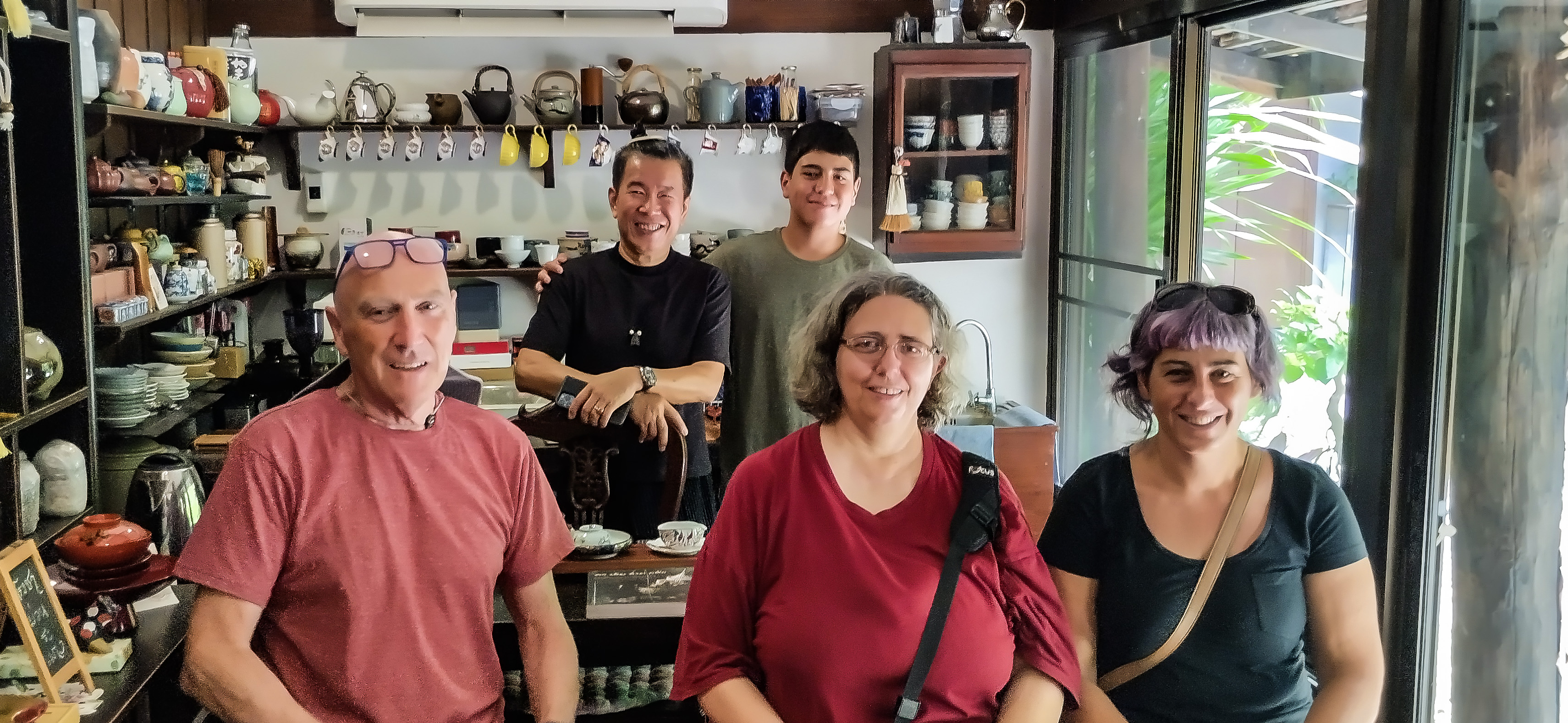
Chiang Mai non finisce mai di sorprendere soprattutto se si hanno cuore e mente aperti e attenti per accogliere opportunità di conoscere la cultura locale. Da diverso tempo seguo su Facebook North's Chiangmai, una storica locale che periodicamente propone alcuni tour culturali per approfondire la conoscenza di aspetti particolari della capitale del regno Lanna.


Cogliendo l'occasione della visita di una collega di studi universitari insieme a suo padre e suo figlio hochiesto a North's una data extra per il suo tour intitolato
"Lanna Talismanic Tour - Spiritual Traditions and Beliefs", una occasione unica di visitare la straodinaria collezione privata del prof. Wiluck Sripasang, uno dei massimi esperti della cultura Lanna.


Lasciatemi scrivere che è stata un'esperienza eccezionale. Il professore per un paio di ore è stato a nostra completa disposizione fornendo spiegazioni dettagliate, pronto a rispondere ad ogni domanda e stabilendo un rapporto empatico con il giovane Lucas che si è dimostrato il più curioso e pronto fare tante domande.

La casa del professor Wiluck, in stile Lanna, accoglie le collezioni in varie stanze. Dapprima abbiamo incontrato il professore nel suo studio dopo le presentazioni ha chiesto ad ognuno di noi a cosa fossimo più interessati e in base alle nostre risposte abbiamo iniziato la visita dalla stanza degli amuleti. Una collezione straordinaria suddivisa in varie bacheche secondo la tipologia e lo stile. Qui sono conservati anche alcuni copricapo usati dagli sciamani, adornati con ossa di animali o zanne di tigre, su di uno vi è il teschio di una scimmia che una volta indossato permette di essere posseduto da uno spirito. Un'altra bacheca contiene alcuni talismani che in realtà sono corna di cervo deformi. Nel senso che non si utilizzano i palchi di corna normali, ma solo quelle deformi perchè contengono una particolare energia. Molto belli sono anche i talismani in avorio, alcuni molto elaborati.

Nella collezione non mancano ovviamente la serie di falli a cui vengono attribuite capacità di protezione da colpi di arma da fuoco. A molti dei talismani della tradizione Lanna viene attribuito il potere di affascinare e attrarre le persone amate. Una volta terminata la visita alla stanza dei talismani il professore ci ha condotto a visitare la collezione di stoffe e di oggetti in stoffa suddivisi per tipologie in base ai gruppi etnici di provenienza. 


La collezione appartiene alla moglie del professore che poi abbiamo incontrato brevemente. Una parte della collezione è dedicata alla principessa Dara Rasmi ultima principessa Lanna, una delle spose di Rama V.


In particolare siamo stati tutti colpiti dall'abito appartenuto alla figlia della principessa, morta all'età di tre anni. 

Un'altra stanza è dedicata alla collezione di spade e pugnali sia da cerimonia sia da combattimento. Lavorazioni particolari soprattutto per quanto riguarda i foderi, alcuni in legno, altri in avorio o argento.


L'ultima collezione è dedicata alle stoffe Yantra, che riportano disegni tradizionali normalmente riprodotti nei tatuaggi sacri. In questo caso il potere viene trasmesso dal contatto con la stoffa. La collezione prevede alcuni pezzi antichi e altri più recenti. A suggellare il clima amichevole che si è creato con il padrone di casa è stato il gesto del professore che ha regalato al giovane Lucas una delle stoffe, di grande valore, invitandolo a portarlo sempre con sè.


Come ultima sosta il professor Wiluck ci ha condotto nella stanza della cerimonia del thè ma senza fare la cerimonia. Ci ha spiegato che qui è solito fare la colazione alle cinque del mattino. Immancabile una straodinaria collezione di teiere e tazze, ma spicca anche la presenza di una grande moka per il caffè.


Prima di terminare la visita ad ognuno di noi viene regalato un talismano che rappresenta un uomo e una donna che si abbracciano simboleggiando l'amore universale. Salutato il professore abiamo raggiunto il ristorante del resort Lanna ricebarn insieme alla nostra guida North. Dopo un pranzo in vero stile Lanna prima di ripartire ci aspetta un'ultima sorpresa. North ci conduce al piano superiore dove è presente una collezione appartenente alla proprietaria del resort. Si tratta per lo più di strumenti da lavoro, ma anche di decorazioni tipiche normalmente collocate sui tetti delle case Lanna. 

Abbiamo trascorso alcune ore immersi nella cultura che ha caratterizzato la vita, la storia, l'arte di questa zona e che ancora è presente e viva nella Chiang Mai moderna.

Consiglio davvero questo tour organizzato da North, vi invito anche a seguire la sua pagina per conoscere gli altri tour a cui mi propongo anche io di partecipare.

[ENGLISH VERSION]


Chiang Mai never ceases to amaze, especially if one has an open heart and mind to welcome opportunities to learn about the local culture. For some time now I have been following on Facebook North's Chiangmai, a local historian who periodically offers cultural tours to learn more about particular aspects of the capital of the Lanna kingdom. Taking the opportunity of a visit by a fellow university student together with her father and son, I asked North's for an extra date on its tour entitled 'Lanna Talismanic Tour - Spiritual Traditions and Beliefs', a unique opportunity to visit the extraordinarily rich private collection of Prof. Wiluck Sripasang, one of the foremost experts on Lanna culture. Let me write that it was an exceptional experience. For a couple of hours, the professor was at our complete disposal, providing detailed explanations, ready to answer every question and establishing an empathetic relationship with young Lucas, who proved to be the most curious and ready to ask many questions. Professor Wiluck's Lanna-style house houses the collections in various rooms.

First we met the professor in his study after introductions he asked each of us what we were most interested in and based on our answers we started the tour from the amulet room. An extraordinary collection divided into various showcases according to type and style. Some headdresses used by shamans are also kept here, adorned with anmali bones or tiger tusks; on one is the skull of a monkey that when worn allows one to be possessed by a spirit. Another display case contains some talismans that are actually deformed deer antlers. In the sense that normal antlers are not used, but only deformed ones because they contain a special energy. Also very beautiful are the ivory talismans, some very elaborate. There is of course no shortage of phalluses in the collection, which are attributed with the ability to protect against gunfire. Many of the talismans in the Lanna tradition are attributed the power to charm and attract loved ones. Once the visit to the talisman room was over, the professor took us on a tour of the collection of textiles and cloth objects divided into types according to ethnic groups of origin. 

 The collection belongs to the professor's wife, whom we met briefly afterwards. Part of the collection is dedicated to Princess Dara Rasmi last Princess Lanna, one of the brides of Rama V. In particular, we were all struck by the dress that belonged to the princess's daughter, who died at the age of three. 

Another room is dedicated to the collection of swords and daggers for both ceremonial and combat use. Particular workmanship is evident in the scabbards, some in wood, others in ivory or silver.

The last collection is dedicated to Yantra cloths, with traditional designs normally reproduced in sacred tattoos. In this case, power is transmitted by contact with the cloth. The collection includes some antique pieces and some more recent ones. Sealing the friendly atmosphere created with the host was the professor's gesture of giving young Lucas one of the fabrics, of great value, as a present, inviting him to carry it with him at all times. As a final stop, Professor Wiluck led us to the tea ceremony room but without performing the ceremony. He explained that it is customary to have breakfast here at five in the morning. There is an extraordinarily large collection of teapots and cups, but also a large coffee mocha stands out. 

Before ending the visit, each of us is given a talisman representing a man and a woman embracing, symbolising universal love. After saying goodbye to the professor, we reached the restaurant of the Lanna ricebarn resort together with our guide North. After a lunch in true Lanna style before leaving, one last surprise awaits us. North takes us upstairs where there is a collection belonging to the owner of the resort. These are mostly work tools, but also typical decorations normally placed on the roofs of Lanna houses. 

We spent a few hours immersed in the culture that has characterised the life, history and art of this area and which is still present and alive in modern Chiang Mai.

I really recommend this tour organised by North, I also invite you to follow his page to find out about the other tours I am also planning to join.


mercoledì 16 ottobre 2019

IL TEMPIO THAI - BREVI E APPROSSIMATIVE INFORMAZIONI PER NON FARE BRUTTA FIGURA - THE THAI TEMPLE - SHORT AND APPROXIMATE INFORMATION TO MAKE A GOOD IMPRESSION

[SCROLL DOWN FOR ENGLISH VERSION]


Per chi è nato e cresciuto in una realtà occidentale, prevalentemente di cultura cristiana, magari anche di corrente cattolica, è sicuramente difficile decodificare tuttto quello che è presente all'interno di un tempio thailandese. Sicuramente siamo portati a fare una grande confusione soprattutto perchè ci troviamo costretti a descrivere con il nostro vocabolario quello che vediamo e che spesso non ha una corrispondenza nella nostra cultura.

Prima di proseguire devo fare una breve premessa. Quando ero una giovane studentessa di Storia Medievale, come tutti i colleghi di studi, ero consapevole che si poteva incorrere in una bocciatura nel caso avessimo usato in modo erroneo i termini monastero e convento o confuso i loro abitanti appunto monaci e monache o frati e suore. Nel senso che i monaci abitano nei monasteri che seguono regole più o meno rigide di clausura, mentre i frati e le suore abitano nei conventi e non sono in clausura. Tutto questo per dire che quando parliamo di monaci e monasteri buddisti secondo me utilizziamo termini sbagliati perchè in realtà la loro regola è più simile a quella dei nostri frati. Ma essendo ormai così diffuso tale errore mi adeguero' anche io all'uso corrente e nel descrivere le strutture conventuali buddiste e i loro abitanti utilizzero' i termini monasteri e monaci.


Un tempio buddista è sempre costituito da più edifici, alcuni dedicati al culto e altri ad alloggiare i monaci. Una certa importanza è data all'ingresso del compound del tempio. A volte si tratta di lunghe scalinate, i cui lati sono protetti da figure mitologiche, Naga, draghi, e altri. 


Altre volte l'ingresso è un arco sormontato da un vero e proprio edificio in miniatura definito prasat. In ogni caso deve essere ben delineato  il passaggio dal mondo laico allo spazio sacro, quest'ultimo è protetto dai mostri posti ai lati dell'ingresso per impedire ai demoni di entrare. E' noto infatti che i templi sono off-limits per i fantasmi.

Una volta entrati nel tempio di solito troviamo almento tre edifici: la wihan (sala dell'assemblea), la bot o ubosot (sala delle ordinazioni) e lo stupa (sacrario).


WIHAN
La wihan è l'edificio dedicato alla maggior parte delle funzioni che si svolgono all'interno del tempio, preghiere, canti e letture, assemblee della comunità e interazioni tra monaci e fedeli in occasione di particolari festività, quando vengono pronunciati dei sermoni. All'interno di un tempio possiamo trovare anche più wihan di diverse dimensioni. 
Tale edificio è costruito lungo un asse est-ovest in modo che la facciata sia rivolta verso il sole nascente.
La wihan simboleggia l'imbarcazione sacra che attraversa l'oceano del Samsara (il ciclo infinito delle rinascite). 
BOT O UBOSOT


La bot o ubosot è molto simile alla wihan, ma è sempre singola. Nel nord della Thailandia spesso è più piccola,  collocata dietro e sulla sinistra rispetto alla wihan. Questo edificio è utilizzato per le ordinazioni dei monaci e per ogni rito riguardante la diciplina monastica. A volte la bot può essere chiusa, in particolare nelle aree rurali, in alcuni casi l'ingresso è comunque vietato alle donne o ai laici.

La sala delle ordinazioni è riconoscibile da otto elementi in pietra (bai sema), posti al livello del terreno per delemitare l'area sacra nei suoi punti cardinali e sub-cardinali, in corrispondenza sono seppellite delle sfere in pietra rivestite di foglie d'oro (luk nimit), una nona sfera è sepolta al centro della bot. Nessuno devono camminare o puntare i propri piedi sopra una luk nimit.


STUPA (CHEDI)

La terza immancabile struttura è lo stupa o chedi, monumento commemorativo del Buddha. Simbolizza il Monte Meru, centro cosmico dell'universo buddista.
Lo stupa centrale è la struttura più importante del tempio, nel caso contenga una reliquia del Buddha il tempio acquisisce il titolo phra that, nel nord sono poco più di venti i templi con questo titolo, il pù noto è sicuramente il wat phratat doi suthep sulla montagna che domina Chiang Mai.


[ENGLISH VERSION]
For those who were born and raised in a western reality, mainly of Christian culture, perhaps also of Catholic current, it is certainly difficult to decode everything that is present within a Thai temple. Surely we are led to make a great deal of confusion, especially because we are forced to describe with our vocabulary what we see and often does not have a correspondence in our culture.

Before continuing I must briefly give an introduction. When I was a young student of Medieval History, like all colleagues of studies, I was aware that we could have a failure if we used the terms monastery and convent incorrectly or confused their inhabitants precisely monks and nuns or monks and nuns. In the sense that the monks live in monasteries that follow more or less strict rules of clausura, while the friars and nuns live in the convents and are not in clausura. All this to say that when we speak of Buddhist monks and monasteries in my opinion we use the wrong terms because in reality their rule is more similar to that of our friars. But since this error is now so widespread, I too will adapt to current use and in describing Buddhist convent structures and their inhabitants will use the terms monasteries and monks.

A Buddhist temple is always made up of several buildings, some dedicated to worship and others to house the monks. A particular importance is given to the entrance of the temple compound. Sometimes they are long staircases, whose sides are protected by mythological figures, Naga, dragons, and others.

Other times the entrance is an arch surmounted by a real miniature building called prasat. In any case, the passage from the secular world to the sacred space must be well defined, the latter is protected by the monsters placed at the sides of the entrance to prevent demons from entering. It is well known that temples are off-limits to ghosts.

Once in the temple we usually find at least three buildings: the wihan (assembly hall), the bot or ubosot (ordination hall) and the stupa (shrine).

WIHAN

The wihan is the building dedicated to most of the functions that take place within the temple, prayers, songs and readings, community assemblies and interactions between monks and faithful during particular holidays, when sermons are given. Inside a temple we can also find several wihans of different sizes.
This building is built along an east-west axis so that the facade faces the rising sun.
The wihan symbolizes the sacred boat that crosses the ocean of Samsara (the endless cycle of rebirths).

BOT OR UBOSOT
The bot or ubosot is very similar to the wihan, but it is always single. In northern Thailand it is often smaller, located behind and to the left of the wihan. This building is used for the ordination of monks and for any ritual concerning monastic discipline. Sometimes the bot can be closed, especially in rural areas, in some cases the entrance is however forbidden to women or lay people.

The ordination room is recognizable by eight stone elements (bai sema), placed at ground level to delimit the sacred area in its cardinal and sub-cardinal points, in correspondence are buried stone spheres covered with gold leaves (luk nimit), a ninth sphere is buried in the center of the bot. No one should walk or point their feet at a luk nimit.

STUPA

The third structure that is not to be missed is the stupa or chedi, a memorial to the Buddha. It symbolizes Mount Meru, the cosmic center of the Buddhist universe.
The central stupa is the most important structure of the temple, in case it contains a relic of the Buddha the temple acquires the title phra that, in the north there are just over twenty temples with this title, the best known is definitely the wat phratat doi suthep on the mountain that dominates Chiang Mai.

domenica 4 agosto 2019

DURIAN - UNA BONTA' DISGUSTOSA - A DISGUSTING GOODNESS


SCROLL DOWN FOR ENGLISH

Uno dei segnali che spesso i turisti non riescono ad interpretare visitando la Thailandia è quello riprodotto sopra. Lo trovate di solito negli alberghi, soprattutto negli ascensori, autobus e anche negli uffici.
Di quale pericolosa minaccia si tratta? Semplicemente un frutto di una bontà non assolutamente descrivibile con parole umane, ma che emana uno degli odori più disgutosi e persistenti che possiate percepire nella vostra vita. Inoltre tale odore penetra in tutto quello che si trova nei paraggi di un Durian aperto, non mettetelo mai in frigo dove tenete altri cibi...anni fa rovinai un barattolo di Nutella, il cui prezioso contenuto aveva cambiato sapore e il risultato non era dei migliori. 


Quello che mi sono sempre chiesta è come abbiano fatto a capire che quella polpa cremosa e nauseabonda fosse commestibile. Ho visto gente mangiarlo tenendo una molletta sul naso. Io riuscii ad assaggiarlo molti anni fa, vincendo il senso di repulsione, e quello che ho sentito invadere le mie papille gustative è stato un sapore che non so descrivere e non so neanche trovare dei termini di paragone. Un gusto pieno e assoluto che avvolge lingua e palato. Pochi secondi di godimento puro che precedono almeno 48 ore in cui di tanto in tanto sentirete il bisogno di ruttare, ritrovando il sopradescritto sapore pero' inacidito. Alcuni consigliano di mangiarlo a stomaco vuoto, in modo che non faccia fermentare quanto precedentemente ingerito. Nonostante gli inconvenienti rimane una delle esperienze da fare se si vive in Thailandia.

Il frutto è di grandi dimensioni e ha una scorza esterna molto spessa e 

con grandi spine piramidali, non è neanche semplice da maneggiare. 

ENGLISH VERSION

One of the signs that tourists often fail to interpret when visiting Thailand is the one reproduced above. It is usually found in hotels, especially in elevators, buses and even in offices.
What dangerous threat is it? Simply a fruit of a goodness that can't be described in human words, but that emanates one of the most disguised and persistent smells that you can perceive in your life. Moreover, this smell penetrates everything that is in the vicinity of an open Durian, never put it in the fridge where you keep other foods ... years ago I ruined a jar of Nutella, whose precious content had changed flavor and the result was not the best. 
What I've always wondered is how they understood that that creamy and nauseating pulp was edible. I saw people eating it while holding a clip on their nose. I managed to taste it many years ago, overcoming the sense of repulsion, and what I felt invading my taste buds was a taste that I can not describe and I can not even find terms of comparison. A full and absolute taste that envelops tongue and palate. A few seconds of pure enjoyment that precede at least 48 hours in which from time to time you will feel the need to burp, finding the flavor described above but  sour. Some people recommend eating it on an empty stomach, so that it does not ferment as much as it was previously ingested. Despite the drawbacks it remains one of the experiences to be done if you live in Thailand.
The fruit is large and has a very thick outer skin and large pyramidal spines, is not even easy to handle.

sabato 20 luglio 2019

CINEMA THAILANDESE: I MIEI FILM - THAI CINEMA: MY MOVIES


[SCROLL DOWN FOR ENGLISH]

Questo post ha lo scopo di condividere con voi i film thailandesi che nel corso di questi anni ho visto e apprezzato. Ovviamente la mia è una conoscenza parziale e se qualcuno volesse contribuire suggerendo altri titoli e autori mi farà molto piacere. Tornero' ancora sull'argomento anche perchè per il momento ho evitato il genere horror che è quello più prolifico del cinema thai.

Il primo regista che mi viene in mente è il più famoso al momento e il cui lavoro è apprezzato anche all'estero, Apichatapong Weerasathakul, nel 2010 vinse la Palma d'Oro a Cannes con "Uncle Boonmee Who Can Recall His Past Lives - ลุงบุญมีระลึกชาติ", in italiano "Lo zio Boonmee che si ricorda le vite precedenti". Ritmi molto lenti e riferimenti costanti alla cultura e tradizioni locali, non è un film facile da vedere (due amiche che convinsi a vederlo, dopo tre anni, ancora mi tormentano). A me è piaciuto perchè nel vederlo ho capito come sia possibile per i thai una interazione costante nel quotidiano con la presenza dei "fantasmi" o comunque con creature "altre"...e la magnificenza del rapporto ancestrale con la natura. Sia chiaro non è un film horror, anzi oserei dire che è quasi neo-realista considerando la realtà locale. Quando ricevette la Palma d'Oro il regista nei suoi ringraziamenti incluse anche "i miei fantasmi", il pubblico rise, ma io sono convinta che intendesse davvero ringraziare i fantasmi a lui vicini...
Per completezza di informazioni devo dire che Apichatapong è un artista che sperimenta varie forme di arte visuale, installazioni, cortometraggi, ecc... I suoi film hanno spesso avuto problemi con la censura, tanto che lui stesso ha deciso di non far uscire in Thailandia il suo ultimo lavoro "Cemetery of splendour", che a me intriga già dal titolo. Non avendolo ancora visto vi posto il link ad una bellissima recensione: http://specchioscuro.it/cemetery-of-splendour/ 


Ora in ordine sparso partendo da un film che ho visto molti anni fa, considerato ormai un classico: "Mekhong Full Moon Party", del 2002, (si trova anche su youtube nella versione thai senza i sottotitoli). Il film prende spunto dal fenomeno delle palle di fuoco che ogni anno in occasione della luna piena di Ottobre si alzano dal fiume Mekong, nei pressi della cittadina di Nong Khai. Un fenomeno che ogni anno attira migliaia di persone e finora rimasto senza spiegazioni, secondo la leggenda tale fenomeno è provocato dal serpente Naga che vive nel fiume. Il film parte dal presupposto che in realtà si tratti di un trucco realizzato dai monaci del tempio locale, ma...vabbe' non spoilero il finale. Cito solo una frase del dialogo tra il giovane protagonista e il suo "padre spirituale", l'abate del tempio, di fronte alle proteste del ragazzo circa l'inopportunità di perpetrare ancora questo fenomeno, il monaco risponde: "Ricordati la fede è più importante della verità" e lo consiglia a "fare quello in cui credi, e a credere in quello che fai". Aggiungo solo che vorrei proprio andare a Nong Khai il prossimo plenilunio di Ottobre...


Un film che reputo davvero imperdibile è "Beautiful Boxer" di Ekachai Uekrongtham, del 2003. Racconta la storia del campione di boxe thailandese Parinya Charoenphol detta Nong Toom, che nel momento di massimo successo e fama decise di intraprendere il percorso terapeutico per la riassegnazione del sesso. Una storia che suscitò un grande dibattito pubblico, un po' come se da noi una scelta del genere la facesse un calciatore come Francesco Totti. Il film che si snoda come una lunga intervista, ripercorre l'infanzia e l'adolescenza del campione, fino alla consapevolezza della necessità di operarsi.

"Jack: But I still don't understand how your parents can be so... accepting... of the fact that you wanna be a girl.

Nong Toom: They know it's my karma. I did bad thing in past life, so I had to suffer in this life.
Jack: Where did you learn that from?
Nong Toom: In the temple, when I was monk".
In queste poche battute c'è la sintesi del pensiero thailandese circa la transessualità e l'omosessualità, in parte viene a mancare lo stigma presente nelle culture occidentali, ma di certo l'identità trans o omosessuale attuale è la punizione per cattivi comportamenti in una vita precedente.

[ENGLISH VERSION]

This post aims to share with you the Thai films that over the years I have seen and appreciated. Obviously my knowledge is partial and if someone would like to contribute by suggesting other titles and authors I will be very pleased. I'll come back to the subject again also because for the moment I've avoided the horror genre which is the most prolific of Thai cinema.
The first director who comes to mind is the most famous at the moment and whose work is also appreciated abroad, Apichatapong Weerasathakul, in 2010 won the Palme d'Or in Cannes with "Uncle Boonmee Who Can Recall His Past Lives - ลุงบุญมีระลึกชาติ", in Italian "Lo zio Boonmee che si ricorda le vite precedenti". Very slow rhythms and constant references to local culture and traditions, it's not an easy film to watch (two friends who I convinced to see it, after three years, are still tormenting me). I liked it because when I saw it I understood how it is possible for the Thai a constant interaction in everyday life with the presence of "ghosts" or with "other" creatures ... and the magnificence of the ancestral relationship with nature. Let's be clear: it's not a horror film, on the contrary, I dare say that it's almost neo-realist considering the local reality. When he received the Palme d'Or, the director in his thanks also included "my ghosts", the audience laughed, but I am convinced that he really wanted to thank the ghosts near him ...
For a complete information I must say that Apichatapong is an artist who experiments with various forms of visual art, installations, short films, etc. ... His films have often had problems with censorship, so much so that he himself decided not to release in Thailand his latest work "Cemetery of splendour", which intrigues me already from the title. Not having seen it yet, I put a link to a beautiful review: http://specchioscuro.it/cemetery-of-splendour/
Now in scattered order starting from a film I saw many years ago, now considered a classic: "Mekhong Full Moon Party", 2002, (also found on youtube in the Thai version without subtitles). The film takes its cue from the phenomenon of fireballs that every year during the full moon in October rise from the river Mekong, near the town of Nong Khai. A phenomenon that every year attracts thousands of people and so far remained unexplained, according to legend this phenomenon is caused by the snake Naga who lives in the river. The film starts from the assumption that it is actually a trick made by the monks of the local temple, but...well, it doesn't spoil the ending. I quote only one sentence from the dialogue between the young protagonist and his "spiritual father", the abbot of the temple, in the face of the boy's protests about the inappropriateness of perpetrating this phenomenon again, the monk replies: "Remember faith is more important than truth" and advises him to "do what you believe in, and believe in what you do". I would just like to add that I would like to go to Nong Khai on the next full moon in October...
A film that I think is really not to be missed is "Beautiful Boxer" by Ekachai Uekrongtham, from 2003. It tells the story of Thai boxing champion Parinya Charoenphol, known as Nong Toom, who at the height of his success and fame decided to embark on a therapeutic path to sex reassignment. A story that aroused a great public debate, a bit like a choice like that made by a footballer like Francesco Totti. The film unfolds like a long interview, retracing the childhood and adolescence of the champion, up to the awareness of the need to operate.

"Jack: But I still don't understand how your parents can be so... accepting... of the fact that you wanna be a girl.
Nong Toom: They know it's my karma. I did bad thing in past life, so I had to suffer in this life.
Jack: Where did you learn that from?
Nong Toom: In the temple, when I was monk".

In these few lines there is the synthesis of Thai thought about transsexuality and homosexuality, in part there is a lack of stigma that is present in Western cultures, but certainly the current transsexual or homosexual identity is the punishment for bad behavior in a previous life.


martedì 2 luglio 2019

MUAY THAI - THAI BOXE


[SCROLL DOWN FOR ENGLISH]

Non amo particolarmente la Muay Thai o boxe tradizionale thailandese. Ma vivendo in questo paese non ci si può esimere dall'assistere a qualche incontro, se non altro per giusta curiosità intellettuale. Poi succede che una tua cara amica sia anche una boxeur davvero brava e allora capita che andrai a vedere anche più di un incontro.

La Muay Thai è uno sport molto diffuso anche al di fuori dei confini della sua terra di origine e sono tante le palestre che offrono stage o pacchetti di allenamento anche a farang che arrivano da tutto il mondo.


Io sono sempre andata a vedere incontri che Miriam, la mia amica, ha combattuto al Thapae Boxing Stadium la cui fatiscenza strutturale appare assolutamente in linea con lo stereotipo con cui di solito vengono rappresentati i luoghi dove si pratica la boxe.


Di solito nelle serate si svolgono più incontri,  il primo è quasi sempre quello tra due bambini in età preadolescenziale e questo è uno degli aspetti per me odiosi.
A quella età da noi credo non possano neanche avvicinarsi al campanello della palestra, qui combattono senza alcuna protezione, in un ambiente malsano con avventori che piazzano scommesse. E questi piccoli sono lì a fare a pezzi il proprio desiderio di riscatto e la loro voglia di portare a casa qualche soldo in più.
Poi gli incontri diventano più interessanti e sul ring si alternano sia match femminili sia maschili. 
Ieri quello di Miriam era l'ultimo della serata, per me è stato molto interessante perché ho potuto assistere anche alle fasi di riscaldamento e altre ritualità che precedono l'incontro vero e proprio.


Poi per la prima volta mi sono cimentata a scattare delle foto di un incontro di boxe con una reflex e non è stato affatto semplice. Al di là della imprevedibilità dei movimenti sul ring, ci sono delle difficoltà di inquadratura a causa delle corde che finiscono sempre con il tagliare l'immagine, per non dire poi dell'arbitro che fa il suo mestiere che è esattamente quello di stare in mezzo e coprire la visuale. Nonostante questo però delle circa trecento foto scattate la metà sono abbastanza guardabili, troverete il link in fondo al post.


Per il resto è indubbio che la pratica di questo sport scolpisca in modo armonico il fisico, sviluppi doti intellettive particolari richiedendo estrema rapidità di scelta e di esecuzione. Il gesto sportivo, l'azione atletica conservano il fascino del combattimento leale ad armi pari, non conosco tutti i codici interpretativi ma questo non mi impedisce di apprezzarne la bellezza. Stavo dimenticando di scrivere che Miriam ha vinto, la sua avversaria ha gettato la spugna alla quarta ripresa, dopo aver accusato una serie di calci al petto assestati magistralmente da Miriam. 


Prima di chiudere questo post però voglio citare un bellissimo film thailandese del 2003 diretto da Ekachai Uekrongtham: The Beautiful Boxer, ispirato alla vita di Parinya Charoenphol, uno dei campioni più famosi e amati di Muay Thai, che nel momento di massima notorietà decise di sottoporsi all'intervento per la riattribuzione del sesso. Un film intenso e una storia bellissima.

Album foto: Muay Thai - Miriam

[ENGLISH VERSION]

I don't particularly like Muay Thai or traditional Thai boxing. But if you live in this country you can not avoid attending some meetings, if for no other reason than intellectual curiosity. Then it happens that a dear friend of yours is also a really good boxer and then it happens that you will go to see even more than one meeting.

Muay Thai is a very popular sport even outside the borders of its land of origin and there are many gyms that offer internships or training packages even to farang that come from all over the world.

I've always gone to see encounters that Miriam, my friend, fought at the Thapae Boxing Stadium, whose structural crumbling appears to be absolutely in line with the stereotype with which the places where boxing is practiced are usually represented.

Usually in the evenings there are more meetings, the first is almost always the one between two children in pre-adolescence and this is one of the aspects I hate.
At that age, in Italy I think they can't even get close to the doorbell of the gym, here they fight without any protection, in an unhealthy environment with patrons who place bets. And these little ones are there to tear apart their desire for redemption and their desire to take home some extra money.
Then the encounters become more interesting and both male and female matches alternate in the ring. 
Yesterday Miriam's match was the last of the evening, for me it was very interesting because I was also able to attend the warm-up phases and other rituals that precede the actual match.
Then for the first time I tried to take pictures of a boxing match with a reflex camera and it was not easy at all. Beyond the unpredictability of the movements in the ring, there are difficulties in framing because of the ropes that always end up cutting the image, not to mention the referee who does his job which is exactly to stay in the middle and cover the view. Despite this, however, of the about three hundred photos taken half are quite watchable, you will find the link at the bottom of the post.
For the rest, there is no doubt that the practice of this sport harmoniously sculpts the body, develops particular intellectual skills requiring extreme speed of choice and execution. The sporting gesture, the athletic action retain the charm of fair fighting on equal terms, I do not know all the codes of interpretation but this does not prevent me from appreciating the beauty. I was forgetting to write that Miriam won, his opponent threw in the towel in the fourth round, after accusing a series of kicks to the chest seated masterfully by Miriam. 
Before closing this post, however, I want to mention a beautiful Thai film of 2003 directed by Ekachai Uekrongtham: The Beautiful Boxer, inspired by the life of Parinya Charoenphol, one of the most famous and beloved champions of Muay Thai, who at the time of maximum notoriety decided to undergo surgery for the re-attribution of sex. An intense film and a beautiful story.


MONACHESIMO FEMMINILE: LA GOCCIA CHE SCAVA LA ROCCIA - FEMININE MONASTICISM: THE DROP THAT HOLDS THE ROCK

  [SCROLL FOR ENGLISH] In Thailandia le bikkhhuni esistono e stanno crescendo. Il turista medio occidentale quando immagina o ricorda un vi...