Visualizzazione post con etichetta Religione. Mostra tutti i post

domenica 4 giugno 2023

GIGANTI, CANNIBALI, BUFALI E SANGUE - GIANTS, CANNIBALS, BUFFALOES AND BLOOD


[SCROLL DOWN FOR ENGLISH]

Tutto inizia con una leggenda e come sempre se ne possono trovare diverse versioni, cerchiamo di darne una versione di sintesi. Quando il Buddha era ancora vivo si recò presso un villaggio di cui aveva avuto una visione notturna. Il villaggio era stato benedetto dal dio Brahma e dal dio Indra e dagli angeli che lo avevano riempito di oro e di argento. Camminando lungo le strade del villaggio Buddha però si accorse che erano praticamente vuote e chiese ad uno degli anziani cosa fosse successo. L'uomo interpellato rispose che le montagne a nord e a sud, oggi note come Doi Suthep e Doi Kham, erano abitate da due giganti, moglie e marito, che si nutrivano di esseri umani e così gli abitanti erano stati decimati. In altre versioni la coppia ha anche un figlio, quindi i giganti sarebbero stati tre. Buddha provò una grande compassione e decise di andare a parlare con i due giganti. In alcune versioni si riporta invece che i due giganti lo cercarono per mangiarselo e una volta incontratolo si lasciarono convertire. In ogni caso l'esito di questo incontro fu una trattativa finalizzata a mettere fine alla carneficina della popolazione. I giganti chiesero di poter mangiare in sostituzione una persona al mese, ma la risposta del Budda fu no, allora una all'anno ma la risposta fu ancora no. I due giganti allora pensarono di chiedere di poter mangiare due bufali all'anno. Budda non rispose nè in senso positivo nè negativo. Così i due mostri compresero che per aver accesso agli insegnamenti del Budda non avrebbero mai più dovuto nutrirsi di esseri umani. Ricevettero la benedizione di Budda, che consegnò loro i cinque precetti prima di andarsene. Da allora nel nono mese del calendario lunare viene organizzata una festa nella foresta per offrire il bufalo ai due giganti. Ad oggi la festa si svolge ai piedi del Doi Kham, in una radura facilmente accessibile in motorino o auto. Alle prime luci dell'alba viene ucciso un bufalo, che deve essere il più bello e in forma del villaggio, il più anziano tra quelli che non hanno mai montato, con un nuovo paio di corna, che non abbia mai combattuto, un bufalo d'acqua di colore nero. L'uccisione del bufalo non avviene pubblicamente.


Io sono arrivata nel sito alle sette del mattino, c'erano meno di trenta persone, il corpo dell'animale era già collocato all'interno di un recinto. La carcassa è su una pedana in legno, rivestita da teli di plastica, leggermente rialzata dal terreno. E' intera con ancora la pelle, ma squartata, in un anfora verrà versato il sangue e in due latte le interiora, lavorate e credo cucinate. Di fianco alla piattaforma è collocata una struttura dove sono appesi una sorta di ghirlanda con due grossi pezzi di carne, diversi contenitori in bambù che verranno riempiti di alcool, probabilmente un whiskey locale.

Nell'ambito del recinto sono collocate delle strutture in legno, sono dodici, su ognuna è riportata una scritta che però non riesco a comprendere. In ognuna è collocata un'offerta di frutta e cibo vario. Un anziano laico all'interno del recinto recita alcune preghiere, leggendole su una sorta di taccuino, molto consunto e che tratta con molti riguardi. Intanto la carcassa si riempie di mosche e qualche farfalla, a tratti, secondo la direzione del vento, si comincia a sentire anche un po' di odore. Nel frattempo sono arrivate molte persone. Sono praticamente l'unica farang, poi arriverà un gruppetto di giovani, una quindicina, ma andranno via in breve credo siano arrivati per sbaglio. Sotto un gazebo sono collocati dei monaci che guideranno la prima parte del rito. Poco oltre un altro gazebo ospita delle suore. A questo punto manca solo il Buddha  o meglio la sua rappresentazione pittorica. 
In distanza si iniziano a sentire i suoni del corteo che trasporta la cassa contenente il Prah Poth, un lungo stendardo in tessuto in cui è raffigurato Buddha. La cassa è trasportata a spalla, accompagnata da un lungo corteo di danzatrici e uomini e donne che si aggiungono alla folla di fedeli che nel frattempo è aumentata. Gli uomini posizionano la cassa ai piedi dell'albero più alto, accolta dai canti dei monaci, mentre un monaco anziano la benedice con acqua benedetta.


Occorrono circa venti minuti per completare le operazioni per innalzare lo stendardo. La folla rimane in silenzio, non ci sono applausi o altre manifestazioni di giubilo o devozione, solo mani giunte e "Satun, satun, satun".


Ora non resta che attendere l'arrivo dei giganti. Il medium è all'interno di un piccolo sala, non aperto al pubblico. Le due orchestre suonano musica thailandese tradizionale, al ritmo di tamburi e cembali. Ed ecco uscire il medium in stato di trance, posseduto dallo spirito femminile di Yaa Saeh. Camicia e bandana bianche e una lunga gonna in seta con disegno tradizionale. Yaa Saeh cammina sostenuta da due aiutanti e si ferma di fronte ad ognuna delle strutture in legno, probabilmente per accogliere simbolicamente le offerte in esse contenute.

Quando si volta e cammina verso di noi ci saluta con la mano, il viso ha un'espressione dolce, non emette suoni nè articola parole.

Dopo questo giro, torna all'interno del sala. Ancora un po' di attesa e fa la sua comparsa un barcollante Pu Saeh. Si dirige verso il bufalo sostenuto dagli aiutanti, gli appendono al collo i due pezzi di carne tenuti insieme da un cordoncino e i contenitori di bambù con il liquore, sale sulla pedana e praticamente cade seduto sulla schiena del bufalo.


 Si porta alla bocca uno dei pezzi di carne e con un morso ne stacca un pezzo. Mette le mani nella ciotola contenente le interiora, ma sembra riluttante, poi apre una giara e immerge le mani nel sangue, si porta la mano a cucchiaio alle labbra e ne beve, poi si passa le mani sul volto e sulla bandana bianca.


Poi di nuovo morde la carne e ricomincia il giro. Si aiuta bevendo il liquore dai contenitori di bambù, anch'essi appesi al collo.


Poi a fatica si alza, si avvicina alla staccionata e saluta uno ad uno i presenti, ponendo una mano sulla loro testa. Quando arriva di fronte a me sembra collassare e si siede per terra, i pezzi di carne strisciano sul terreno, ma ugualmente li afferra e li morde.


Lo aiutano a rialzarsi, ma dopo un paio di passi cade di nuovo. Infine si rialza e torna verso il bufalo, si siede di nuovo a cavalcioni e ricomincia di nuovo il ciclo precedente, ma questa volta assaggia anche le interiora. A questo punto Pu Saeh chiede dell'acqua, gli aiutanti sembrano esserne sorpresi ma prontamente arriva una bottiglietta di plastica, non un contenitore di bambù.

Infine Pu Saeh si alza e sempre sorretto si reca a rendere omaggio all'immagine del Buddha, quindi ritorna al sala. I fedeli iniziano ad abbandonare il luogo, alcuni raccolgono i petali di fiori che sono stati lanciati nel momento dell'innalzamento dello stendardo.

Altri utilizzano acqua benedetta per benedirsi. Lo stand più affollato è quello che distribuisce copia in miniatura dello stendardo, non c'è scritta nessuna cifra, vedo gli altri consegnare 20 bhat e così faccio anche io. Rapidamente la folla si disperde, la maggior parte in direzione del wat doi kham e della strada principale. Non sono in grado di quantificare con precisione il numero dei presenti, ma credo almeno più di mille persone. 

Ci tenevo molto ad assistere a questo rito, ne avevo avuto notizia l'ultima volta che era stato celebrato in forma pubblica, ma non ero riuscita ad andare. Poi negli anni del covid il rito si è svolto in forma aperta solo ai rappresentanti istituzionali. E' stata una esperienza notevole, mi è già capitato in altri post di citare il lavoro dell'antropologo Pattana Kitiarsa, Beyond Syncretism: Hybridization of Popular Religion in Contemporary Thailand, in cui teorizza l'ibridizzazione dei sistemi religiosi presenti in Thailandia. Assistere a questo rituale così articolato è stato come vedere il testo del professor Pattana in tre dimensioni. Pratiche animistiche che si fondono con devozioni e riti buddisti.

[ENGLISH VERSION]

 It all starts with a legend and as always there are several versions of it, let us try to give a summary version. When the Buddha was still alive he went to a village of which he had had a night vision. The village had been blessed by the god Brahma and the god Indra and angels who had filled it with gold and silver. Walking along the village streets however Buddha noticed that they were practically empty and asked one of the elders what had happened. The man asked replied that the mountains to the north and south, now known as Doi Suthep and Doi Kham, were inhabited by two giants, husband and wife, who fed on humans and so the inhabitants had been decimated. In other versions, the couple also had a son, so there would have been three giants. Buddha felt great compassion and decided to go and talk to the two giants. Some versions report instead that the two giants sought him out to eat him and once they met him, they allowed themselves to be converted. In any case, the outcome of this meeting was a negotiation aimed at putting an end to the slaughter of the population. The giants asked if they could eat one person a month as a substitute, but the Buddha's answer was no, then one a year but the answer was still no. The two giants then thought of asking to be allowed to eat two buffaloes a year. Buddha answered neither positively nor negatively. So the two monsters realised that in order to gain access to the Buddha's teachings they would never have to feed on humans again. They received the Buddha's blessing and he gave them the five precepts before leaving. Since then, a festival has been held in the forest in the ninth month of the lunar calendar to offer the buffalo to the two giants. To this day, the festival takes place at the foot of Doi Kham, in a clearing easily accessible by moped or car. At first light, a buffalo is killed, which must be the best-looking and fittest buffalo in the village, the oldest one, with a new pair of horns, that has never fought, a black water buffalo. The killing of the buffalo does not take place publicly. I arrived at the site at seven o'clock in the morning, there were less than thirty people, the body of the animal was already placed inside an enclosure. The carcass is on a wooden platform, covered with plastic sheeting, slightly raised from the ground. It is whole with the skin still on, but quartered; in an amphora the blood is poured and in two cans the entrails, processed and I think cooked. Next to the platform is a structure where a sort of garland is hung with two large pieces of meat, several bamboo containers that will be filled with alcohol, probably a local whiskey. Within the enclosure there are wooden structures, there are twelve of them, on each one there is an inscription which I cannot understand.  In each one is placed an offering of fruit and various foods. An elderly layman inside the enclosure recites a few prayers, reading them in a sort of notebook, which is very worn and which he treats with much care. In the meantime, the carcass fills with flies and a few butterflies, at times, depending on the direction of the wind, one even begins to smell something. In the meantime, many people have arrived. I am practically the only farang, then a small group of young people arrive, about fifteen, but they leave shortly, I think they arrived by mistake. Under a gazebo are monks who will lead the first part of the ritual. A little further on another gazebo houses nuns. At this point only the Buddha, or rather his pictorial representation, is missing. In the distance one begins to hear the sounds of the procession carrying the chest containing the Prah Poth, a long cloth banner depicting Buddha. The chest is carried on the shoulders, accompanied by a long procession of dancers and men and women who join the crowd of worshippers that has meanwhile grown. The men place the chest at the foot of the tallest tree, greeted by the chants of monks, while an elderly monk blesses it with holy water. It takes about twenty minutes to complete the operations to raise the banner. The crowd remains silent, there is no applause or other expressions of jubilation or devotion, just joined hands and 'Satun, satun'. Now all that remains is to await the arrival of the giants. The medium is inside a small hall, not open to the public. The two orchestras play traditional Thai music, to the rhythm of drums and cymbals. And out comes the medium in a trance-like state, possessed by the female spirit of Yaa Saeh. White shirt and bandana and a long silk skirt with a traditional pattern. Yaa Saeh walks supported by two helpers and stops in front of each of the wooden structures, probably to symbolically receive the offerings they contain. When she turns and walks towards us she waves to us, her face has a gentle expression, she does not make sounds or articulate words. After this turn, he goes back inside the hall. Some more waiting and a staggering Pu Saeh makes his appearance. He makes his way to the buffalo supported by the helpers, hangs the two pieces of meat held together by a string and the bamboo containers with liquor around his neck, climbs onto the platform and practically falls down sitting on the buffalo's back. He brings one of the pieces of meat to his mouth and with a bite takes a piece out. He puts his hands in the bowl containing the entrails, but seems reluctant, then opens a jar and dips his hands in the blood, brings his hand to his lips and drinks from it, then runs his hands over his face and over the white bandana. Then again he bites into the flesh and starts the round again. He helps himself by drinking the liquor from the bamboo containers, which also hang around his neck.  Then with difficulty he gets up, approaches the fence and greets those present one by one, placing a hand on their heads. When he arrives in front of me he seems to collapse and sits on the ground, the pieces of meat crawl on the ground, but still he grabs them and bites them. They help him up, but after a couple of steps he falls again. Finally he gets up and goes back to the buffalo, sits back on his back and starts the previous cycle again, but this time he also tastes the entrails. At this point Pu Saeh asks for water, the helpers seem to be surprised but promptly a plastic bottle, not a bamboo container, arrives. Finally Pu Saeh gets up and, still supported, goes to pay homage to the Buddha image, then returns to the hall. The worshippers begin to leave the place, some picking up the flower petals that were thrown when the banner was raised. Others use holy water to bless themselves. The most crowded stand is the one handing out miniature copies of the banner, no figure is written on it, I see the others handing out 20 bhat and so do I. Quickly the crowd disperses, most in the direction of wat doi kham and the main street. I cannot accurately quantify the number of people present, but I think at least more than a thousand. 

I really wanted to attend this ritual, I had heard about it the last time it was celebrated in public, but I had not been able to go. Then in the covid years the rite was held in an open form only for institutional representatives. It was a remarkable experience, I have already mentioned in other posts the work of anthropologist Pattana Kitiarsa, Beyond Syncretism: Hybridization of Popular Religion in Contemporary Thailand, in which he theorises the hybridisation of religious systems in Thailand. Watching this articulated ritual was like seeing Professor Pattana's text in three dimensions. Animistic practices merging with Buddhist devotions and rituals.

domenica 26 marzo 2023

LA COLORATA ORDINAZIONE POI SANG LONG - THE COLOURFUL ORDINATION RITUAL POI SANG LONG

[ASCOLTA SU SPOTIFY]

 [SCROLL DOWN FOR ENGLISH]


Secondo la tradizione il principe Siddarta Gauthama aveva un figlio, Rahula. Un giorno il principe Siddharta, sette anni dopo la sua rinuncia, torno' nella sua città natale, Kapilavatthu. Rahula, istruito dalla madre, la principessa Yaśodharā, che lo aveva vestito con gli abiti principeschi, raggiunse il padre, che era accompagnato da ventimila monaci, per reclamare la sua eredità di oro e beni preziosi. Buddha lascio' parlare il figlio, senza prestargli attenzione, poi si rivolse a lui con queste parole: 

«Tu vuoi dell'oro, dell'argento, dei beni materiali, ma queste cose non fanno altro che allungare il saṃsarā! Sarebbe dannoso se ti dessi un'eredità lokī (cioè, quando aumenta l'attaccamento alla sfera dei sensi). Ma, si mostrerebbe incomparabilmente più profittevole che io ti dia un lascito lokuttara (ciò che, invece, libera dal saṃsarā). (Buddha si rivolse al suo nobile discepolo, il Venerabile Sairputta) Mio caro Sāriputtarā! Ho deciso di dare, da questo istante, il mio più nobile lascito a mio figlio. Integratelo nel saṃgha!»

Così il principe Rahula divenne il primo novizio, al seguito di suo padre.


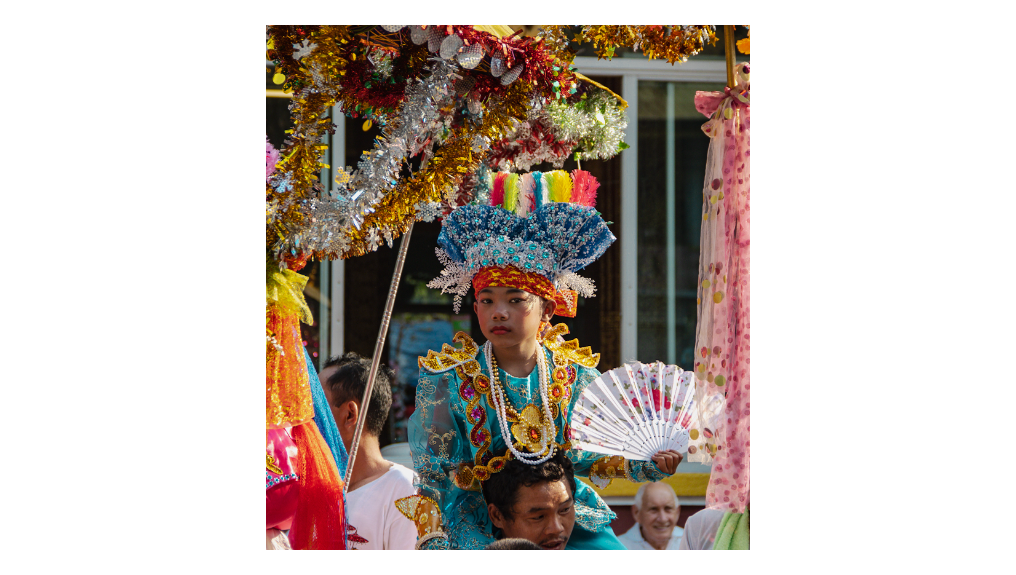
Questa leggenda è la fonte a cui attinge una tradizione  molto sentita nella popolazione Tai Yai, che vive tra Myanmar e nord della Thailandia. "Poi Sang Long", ogni anno i ragazzi tra i sette e quattordici anni di età, vengono ordinati come novizi per apprendere gli insegnamenti della dottrina buddista. Per farlo indossano abiti principeschi e partecipano a vari riti di iniziazione, per una durata di almeno tre giorni.


Dopo la tonsura, che prevede la rasatura di capelli e sopracciglia, i giovani novizi partecipano ad una parata interna al tempio di riferimento e poi ad un'altra che renda omaggio a parenti o altri personaggi influenti della comunità a al luogo fondativo della città. Per tutta la durata dei riti di ordinazione i novizi non possono poggiare i piedi a terra, tranne che all'interno del tempio. Nel corso delle parate per ogni novizio occorrono degli addetti che portino l'ombrello dorato per ripararlo dal sole e che lo portino sulle proprie spalle. 


Un compito importante che viene affidato a persone di fiducia. Per quelle famiglie senza figli o che abbiano solo figlie femmine vi è la possibilità di finanziare l'ordinazione di figli delle famiglie più povere. Questo perchè l'ordinazione dei Sang long è fonte di grandi meriti. 


Personalmente ho assistito alla parata nel tempio Wat Welu Wanaram, noto anche come Wat Ku Tao, a Chiang Mai. E' noto pero' che è a Mae Hong Son che si svolgono le parate più partecipate e sontuose, essendo lì la comunità Tay Yai numericamente più presente. In ogni caso il rito è molto interessante, anche perchè coinvolge davvero l'intera comunità, nell'area del tempio vengono costruite delle sorta di capanne, sollevate dal terreno, su ognuna è presente uno striscione con la fotografia del Sanglong di riferimento con il numero identificativo e nei pressi ci sono tavolate, anch'esse segnate con il numero del Sanglong. La parata è molto colorata e allegra, accompagnata tutto il tempo dai suoni dei tamburi e dei cembali, percussioni varie, gli adulti seguono il proprio Sanglong danzando ad un ritmo incalzante e ripetitivo. Nonostante questo non ci sono manifestazioni di trance di alcun tipo. La sensazione è un magnifico caos ordinato, ci si perdoni l'ossimoro, dove ognuno è consapevole del proprio ruolo. Al termine della processione il corteo gira in tondo nel piazzale del tempio dove è anche allestito un palco, intanto i Sanglong abbandonano la scena per andarsi a cambiare e riposare. 


Il piazzale quindi viene occupato dagli adulti che continuano a danzare in cerchio. Quando decido di venire via, al tramonto, finite le danze il piazzale viene attrezzato con delle sedie davanti al palco. La fine delle danze non determina la fine della musica. Presso molte delle capanne continua il suono dei diversi tamburi e strumenti vari. L'atmosfera è quella di un grande campeggio e di divertimento collettivo. 


Per chi voglia assistere alle prossime ordinazioni questo è il programma nella provincia di Mae Hong Son:

Programma del Poi Sang Long nel distretto di Mueng

26-31 marzo, presso il Wat Na Pa Paek (la parata inizia alle 7:00 del 30 marzo)

3-5 aprile, al Wat Pang Lor (la parata inizia alle 7:00 del 4 aprile)

3-5 aprile al Wat Kha Han (la parata inizia alle 7:00 del 4 aprile)

22-24 aprile al Wat Nai Soi (la parata inizia alle 7:00 del 23 aprile)

Programma del Poi Sang Long nel distretto di Pai

3-5 aprile a Wat Pa Kam (la parata inizia alle 14:00 del 4 aprile)

5-7 aprile al Wat Mae Na Terng Nai (la sfilata inizia alle 14:00 del 6 aprile)

Dal 29 aprile al 2 maggio al Wat Muang Soi (la parata inizia alle 14:00 del 1° maggio)

Programma del Poi Sang Long nel distretto di Mae Sa-Reang

Dal 2 al 4 aprile presso il Wat Sri Boon Rueng (inizio sfilata alle 16.00 del 3 aprile)

7-9 aprile presso il Wat Suphan Na Rang Sri (inizio sfilata alle 16.00 dell'8 aprile)

Programma del Poi Sang Long nel distretto di Pang Ma Pha

20-22 marzo a Wat Mae La Na (inizio sfilata alle 7.00 del 21 marzo)

25-28 marzo presso l'abbazia della grotta di Pa Ya Ngu (la sfilata inizia alle 7:00 del 27 marzo)

Programma del Poi Sang Long nel distretto di Khun Yuam

29 marzo-1 aprile presso il Wat Tor Pae (inizio sfilata alle ore 16.00 del 31 marzo)

Dal 3 al 5 aprile a Wat Kham Nai (la parata inizia alle 7.00 del 5 aprile)

Programma del Poi Sang Long nel distretto di Mae La Noi

Dal 5 all'8 aprile presso il Wat Doi Kaew (la sfilata inizia alle 16:00 del 7 aprile)

Per ulteriori informazioni, contattare il numero 053-612982-3 o la pagina Facebook /TAT. Maehongson.


[ENGLISH VERSION]

According to tradition, Prince Siddhartha Gauthama had a son, Rahula. One day Prince Siddhartha, seven years after his renunciation, returned to his hometown, Kapilavatthu. Rahula, instructed by his mother, Princess Yaśodharā, who had dressed him in princely robes, joined his father, who was accompanied by twenty thousand monks, to claim his inheritance of gold and precious goods. Buddha let his son speak, paying no attention to him, then addressed him with these words: 


"You want gold, silver, material goods, but these things only lengthen the saṃsarā! It would be harmful if I gave you a lokī inheritance (that is, when attachment to the sphere of the senses increases). But, it would prove incomparably more profitable for me to give you a lokuttara bequest (that which, instead, frees you from saṃsarā). (Buddha turned to his noble disciple, the Venerable Sairputta) My dear Sāriputtarā! I have decided to give, from this instant, my noblest bequest to my son. Integrate him into the saṃgha!"

Thus Prince Rahula became the first novice, following his father.


This legend is the source of a tradition that is deeply felt among the Tai Yai people, who live between Myanmar and northern Thailand. "Poi Sang Long", every year boys between the ages of seven and fourteen are ordained as novices to learn the teachings of Buddhist doctrine. To do so, they wear princely robes and participate in various initiation rites, lasting at least three days.


After tonsure, which involves shaving their hair and eyebrows, the young novices take part in a parade inside the temple of reference and then in another that pays homage to relatives or other influential people in the community at the city's founding site. For the duration of the ordination rites, the novices may not place their feet on the ground, except inside the temple. During the parades, each novice requires attendants to carry a golden umbrella to shield him from the sun and to carry it on their shoulders. An important task that is entrusted to trusted persons. For those families without sons or who have only daughters, there is the possibility of financing the ordination of sons from poorer families. This is because the ordination of Sang long is a source of great merit. I personally witnessed the parade in the Wat Welu Wanaram temple, also known as Wat Ku Tao, in Chiang Mai. It is well known, however, that it is in Mae Hong Son that the most attended and lavish parades take place, the Tay Yai community being numerically more present there. In any case, the ritual is very interesting, also because it really involves the entire community. In the temple area, some sort of huts are built, raised from the ground, on each one there is a banner with the photograph of the Sanglong of reference with the identification number and nearby there are tables, also marked with the Sanglong's number. The parade is very colourful and cheerful, accompanied all the time by the sounds of drums and cymbals, various percussion instruments, the adults follow their Sanglong dancing to a relentless and repetitive rhythm. Despite this, there are no manifestations of trance of any kind. The feeling is a magnificent ordered chaos, pardon the oxymoron, where everyone is aware of their role. At the end of the procession, the procession circles around the temple forecourt where a stage is also set up, meanwhile the Sanglong leave the stage to go and change and rest. The square is then occupied by the adults who continue to dance in circles. When I decide to leave, at sunset, the square is equipped with chairs in front of the stage. The end of the dances does not determine the end of the music. At many of the huts the sound of various drums and instruments continues. The atmosphere is that of a large campsite and collective fun.


For those who want to attend the next orders, this is the programme in Mae Hong Son province:

Poi Sang Long programme in Mueng district

26-31 March, at Wat Na Pa Paek (the parade starts at 7am on 30 March)

3-5 April, at Wat Pang Lor (the parade starts at 7am on 4 April)

3-5 April at Wat Kha Han (the parade starts at 7am on 4 April)

22-24 April at Wat Nai Soi (the parade starts at 7am on 23 April)

Programme of the Poi Sang Long in the Pai district

3-5 April at Wat Pa Kam (the parade starts at 2pm on 4 April)

5-7 April at Wat Mae Na Terng Nai (the parade starts at 2pm on 6 April)

29 April to 2 May at Wat Muang Soi (the parade starts at 2pm on 1 May)

Programme of the Poi Sang Long in the Mae Sa-Reang district

2-4 April at Wat Sri Boon Rueng (parade starts at 4pm on 3 April)

7-9 April at Wat Suphan Na Rang Sri (the parade starts at 4 p.m. on 8 April)

Programme of the Poi Sang Long in the Pang Ma Pha district

20-22 March at Wat Mae La Na (parade starts at 7am on 21 March) 

25-28 March at Pa Ya Ngu Cave Abbey (the parade starts at 7am on 27 March)

Programme of the Poi Sang Long in Khun Yuam district

29 March-1 April at Wat Tor Pae (parade starts at 4pm on 31 March)

3 to 5 April at Wat Kham Nai (the parade starts at 7am on 5 April)

Programme of the Poi Sang Long in the Mae La Noi district

From 5 to 8 April at Wat Doi Kaew (the parade starts at 4pm on 7 April)

For more information, contact 053-612982-3 or the Facebook page /TAT. Maehongson.


giovedì 25 luglio 2019

ALLA SCOPERTA DI WAT BAN DEN - DISCOVERING WAT BAN DEN


SCROLL DOWN FOR ENGLISH


Qualche giorno fa sono andata a visitare un tempio che sorge a circa 50 chilometri a nord di Chiang Mai.
In motorino è un bel pezzo di strada ma, ringraziando le divinità della pioggia, sono arrivata senza problemi in una giornata assolata e davvero calda. Il tempio ha il nome di Wat Ban Den e, come tutti i templi thai, è costituito da una serie di edifici, alcuni dedicati al culto altri alla conservazione delle reliquie, poi ci sono gli alloggi dei monaci ed è anche ben visibile un cantiere ancora aperto. Facendo delle ricerche ho appurato che il tempio originario è molto antico ma ormai non esiste più. Nel 1988 grazie allo spirito di inziativa di  Kru Ba Tuang, allora abate del tempio, viene data vita ad una raccolta fondi per la realizzazione di un progetto straordinario la creazione di 12 chedi o pagode dedicati ai 12 animali dello zodiaco.
Questo perchè secondo la tradizione ognuno è tenuto nella sua vita a fare un pellegrinaggio nel tempio ufficiale dedicato all'animale corrispondente al proprio segno zodiacale. La motivazione di fondo dell'abate era quella di favorire i fedeli che spesso devono affrontare lunghi viaggi per mantenre fede alla tradizione del pellegrinaggio. 


Il tempio è collocato su una bassa collina e gli edifici sono collocati su più livelli. Alcuni sono completamente in legno, i tetti sono quasi tutti blu.

Molto interessanti per originalità sono i Naga e altri animali collocati a guardia dei vari edifici, caratterizzati da colori molto vivaci.


In uno dei templi è presente una lunga serie di Buddha in piedi, ognuna in una diversa posizione e vorrei davvero approfondirne in futuro i significati.


Anche qui, come in molti altri templi, sono presenti statue raffiguranti dei monaci. La caratteristica è il loro estremo realismo in quanto realizzate in silicone e collocate in posizioni assolutamente naturali, non è raro quindi, nella penombra di un tempio, scambiarli per esseri viventi...


ENGLISH VERSION

A few days ago I went to visit a temple that stands about 50 kilometers north of Chiang Mai.
By scooter it is a long way but, thanking the gods of the rain, I arrived without problems on a sunny and very hot day. The temple has the name of Wat Ban Den and, like all Thai temples, consists of a series of buildings, some dedicated to worship and others to the preservation of the relics, then there are the homes of the monks and is also clearly visible a construction site still open. By doing some research I have found that the original temple is very old but no longer exists. In 1988, thanks to the spirit of initiative of Kru Ba Tuang, then abbot of the temple, is given life to a fund-raising for the creation of an extraordinary project of 12 chedi or pagodas dedicated to the 12 animals of the zodiac.
This is because according to tradition everyone is required in his life to make a pilgrimage to the official temple dedicated to the animal corresponding to his zodiac sign. The basic motivation of the abbot was to encourage the faithful who often have to make long journeys to keep faith with the tradition of the pilgrimage.
The temple is located on a low hill and the buildings are located on several levels. Some are completely made of wood, the roofs are almost all blue.
Very interesting for originality are the Naga and other animals placed to guard the various buildings, which are characterised by very bright colours.
In one of the temples there is a long series of standing Buddhas, each in a different position and I would really like to deepen their meanings in the future.
Here, as in many other temples, there are statues of monks. The characteristic is their extreme realism as made of silicone and placed in absolutely natural positions, it is not uncommon then, in the twilight of a temple, to mistake them for living beings ...


venerdì 12 luglio 2019

WAT PHRATAT DOI SAKET


[SCROLL DOWN FOR ENGLISH}

Mentre andavo a Chiang Rai il mese scorso mi sono resa conto che in quasi sei anni non ero mai stata a visitare il Wat Phratat Doi Saket, poco fuori Chiang Mai.

Ho deciso così di colmare questa lacuna. 

Il tempio sorge in cima ad una collina ad est della città. Caratterizzato da un Buddha gigante in posizione seduta e visibile anche dalla strada sottostante e da un alto chedi dorato.


Ha una origine antica, sembra sia stato fondato nel 1112 e ha un suo mito fondativo. In base alla leggenda Buddha, mentre si trovava per un breve soggiorno sul Doi Saket, ricevette la visita di un Naga e gli offrì i suoi capelli a scopo di culto prima di andarsene. Per conservare come reliquia i capelli venne così costruito il chedi ricoperto d'oro.

Nonostante la fondazione sia così antica non mancano, come in tutti i templi thai, apporti e costruzioni di recente fattura. Ma una caratteristica unica del Wat Phratat Doi Saket è che i dipinti interni del tempio sono di epoca moderna, opera dell'artista Chaiwat Wannanon, purtroppo in rete non sono riuscita a trovare nessuna notizia significativa circa la sua vita e le sue opere. Ma nelle descrizioni del tempio si dice  che impiegò quattro anni a completare il ciclo, dal 1990 al 1994. I soggetti della sua opera sono quelli classici della spiritualità buddista ma reinterpretati in chiave moderna e con un uso dei colori che si distacca del tutto dalle pitture classiche che troviamo nei templi locali.

Un'altra caratteristica del tempio è che da qui si può godere una vista particolarmente bella della vallata dove è collocata Chiang Mai, fino al Doi Suthep e credo valga la pena fare una seconda visita al tramonto... Intanto ieri ho potuto seguire il temporale monsonico in tutto il suo percorso di attraversamento del lato nord della città dal Doi Suthep al Doi Saket. 


[ENGLISH VERSION]

On my way to Chiang Rai last month I realized that in almost six years I had never been to visit Wat Phratat Doi Saket, just outside Chiang Mai.

So I decided to fill this gap. 

The temple rises on top of a hill at the east of the city. Characterized by a giant Buddha in a sitting position and also visible from the road below and by a high golden chedi.

It has an ancient origin, it seems it was founded in 1112 and has its own founding myth. According to the legend, while Buddha was for a short stay on the Doi Saket, he was visited by a Naga and offered his hair for worship before leaving. To keep the hair as a relic, the chedi, covered in gold, was built.

Although the foundation is so ancient, as in all Thai temples, there is no lack of recent contributions and constructions. But a unique feature of Wat Phratat Doi Saket is that the interior paintings of the temple are from the modern era, the work of the artist Chaiwat Wannanon, unfortunately in the network I could not find any significant news about his life and his works. But in the descriptions of the temple it is said that it took four years to complete the cycle, from 1990 to 1994. The subjects of his work are the classical ones of Buddhist spirituality but reinterpreted in a modern key and with a use of colors that is completely different from the classical paintings that we find in local temples.

Another characteristic of the temple is that from here you can enjoy a particularly beautiful view of the valley where Chiang Mai is located, up to the Doi Suthep and I think it is worth making a second visit at sunset ... Meanwhile yesterday I was able to follow the monsoon storm in all its crossing path of the northern side of the city from Doi Suthep to Doi Saket. 


martedì 18 giugno 2019

IL MONUMENTO SCOMPARSO - IL CREMATORIO DI RAMA IX - THE MISSING MONUMENT - THE CREMATORIUM OF RAMA IX


[SCROLL DOWN FOR ENGLISH]

In questo post vi racconto di un monumento che non potrete vedere e che, a meno che non siate stati a Bangkok tra novembre e dicembre 2018, sicuramente non avete visto. Alla sua costruzione e alla sua decorazione hanno partecipato tutti i più grandi artisti thailandesi contemporanei. La sua costruzione è stata conclusa in sette mesi con una straordinaria corsa contro il tempo. Poi appena finita la sua funzione è stato completamente smantellato perchè la sua permanenza sarebbe stata foriera di cattiva sorte. Sto parlando del magnifico crematorio costruito per la cremazione di re Rama IX, l'amatissimo re deceduto il 13 ottobre del 2016. Secondo la tradizione buddista i corpi vengono cremati e per i normali cittadini questa funzione viene svolta presso i templi provvisti di crematori i cui comignoli sono ben visibili. 

Ma per i reali esiste tutta un'altra modalità. Il crematorio viene costruito appositamente nel sanam luang il grande prato che si trova di fronte all'ingresso del Gran Palace a Bangkok. L'ultimo funerale di un re regnante si era svolto 70 anni prima, nel frattempo poi erano stati costruiti altri crematori per alcuni membri della famiglia reale tra cui quello per la principessa madre e un altro per la sorella del re, la principessa Galyani. Ma ovviamente il crematorio di re Rama IX ha superato tutti gli altri per dimensioni, magnificenza e opere artistiche. La costruzione è stata completata pochi giorni prima della data fissata per i cinque giorni di riti funebri e, ovviamente, non è stato visitabile prima del 26 ottobre 2017 giorno in cui si è svolta la cremazione. 

La struttura per il crematorio di re Rama IX è stata progettata sulla base di antiche tradizioni reali. Con un'altezza di 53 metri, l'edificio poggiava su una base quadrata a tre livelli, con una scala su ciascuno dei quattro lati, larga 60 metri per lato. Il crematorio reale era costituito da nove strutture disegnate nello stile del Busabok, un elaborato trono a padiglione che si assottiglia dalla base in un tetto a gradinate  decorato e sormontato da una guglia. Dei nove Busabok, il Busabok principale, collocato al livello superiore della base del crematorio, aveva un tetto a sette livelli, con copertura a chiocciola, che ospitava Phra Chittakathan, il catafalco per custodire l'urna reale in legno di sandalo. Ognuno dei quattro angoli del livello superiore della base del crematorio reale ospitava un Busabok più piccolo chiamato Sang, un padiglione con tetto a cinque livelli, che ospitava i monaci che pregavano durante il corso della cremazione. I restanti quattro Busabok si trovavano ad ognuno dei quattro angoli sul secondo livello della base del crematorio, portando a nove il numero di strutture Busabok.
In realtà il crematorio altro non è che la rappresentazione del monte Meru la mitica montagna sacra con cinque vette che ospita tutti gli dei, nella tradizione induista.
Tutti e nove i troni Busabok erano posti in cima ad una piattaforma gigante e circondati da uno stagno che rappresentava lo stagno di Anodard ai piedi di Meru.
Sculture di creature mitiche e angeli facevano da guardia alle strutture.

La struttura del crematorio vero e proprio era circondata da una scenografia che riproduceva i principali settori di intervento dei vari progetti reali e delle invenzioni brevettate dal re per aiutare in vari modi la sua gente. 

Successivamente le autorità hanno concesso di aprire al pubblico prima per il solo mese di novembre 2017 e poi, in via eccezionale, hanno prorogato il periodo di visita fino a tutto il mese di dicembre visto il gran numero di visitatori. Dopo il primo giorno di apertura è stata presa la decisione di chiudere l'accesso alla sala della cremazione in quanto numerosi visitatori hanno provato a staccare le parti di muro annerite dal fumo...perchè attraversate dallo spirito del re... Ma questo tipo di fanatismo non è davvero apprezzato.

Io sono riuscita a visitare questo monumento nel mese di dicembre in una giornata grigia di pioggia, bagnandomi fino al midollo ma ovviamente ben felice di essere lì e di poter visitare questa meraviglia nella consapevolezza che dopo pochi giorni sarebbe andata distrutta.


[ENGLISH VERSION]

In this post I will tell you about a monument that you will not be able to see and that, unless you were in Bangkok between November and December 2018, you certainly have not seen. All the greatest contemporary Thai artists took part in its construction and decoration. Its construction was completed in seven months with an extraordinary race against time. Then, as soon as it was finished its function was completely dismantled because its permanence would have been a harbinger of bad luck. I am talking about the magnificent crematorium built for the cremation of King Rama IX, the beloved king who died on October 13, 2016. According to Buddhist tradition the bodies are cremated and for ordinary citizens this function is performed at temples equipped with crematoria whose chimneys are clearly visible.

But for the royals there is a whole other way. The crematorium is specially built in the sanam luang, the large meadow opposite the entrance to the Gran Palace in Bangkok. The last funeral of a king had taken place 70 years before, in the meantime other crematoria had been built for some members of the royal family including the one for the Princess Mother and another for the sister of the king, Princess Galyani. But of course the crematorium of King Rama IX has surpassed all others in size, magnificence and artistic works. The construction was completed a few days before the date set for the five days of funeral rites and, of course, was not open to visitors before the 26 October 2017 day on which the cremation took place.

The structure for King Rama IX's crematorium was designed on the basis of ancient royal traditions. With a height of 53 meters, the building rested on a square base on three levels, with a staircase on each of the four sides, 60 meters wide on each side. The royal crematorium consisted of nine structures designed in the style of the Busabok, an elaborate pavilion throne that tapered from the base into a stepped roof decorated and surmounted by a spire. Of the nine Busabok, the main Busabok, located on the upper level of the crematorium base, had a seven-storey, spiral-covered roof that housed Phra Chittakathan, the catafalque for the royal sandalwood urn. Each of the four corners of the upper level of the base of the royal crematorium housed a smaller Busabok called Sang, a five-level roofed pavilion that housed the monks who prayed during the course of the cremation. The remaining four Busaboks were at each of the four corners on the second level of the crematorium base, bringing the number of Busabok structures to nine.
In reality, the crematorium is nothing more than the representation of Mount Meru, the mythical sacred mountain with five peaks that houses all the gods, in the Hindu tradition.
All nine Busabok thrones were placed on top of a giant platform and surrounded by a pond representing the Anodard lake at the foot of Meru.
Sculptures of mythical creatures and angels guarded the structures.

The structure of the actual crematorium was surrounded by a set that reproduced the main areas of intervention of the various real projects and inventions patented by the king to help his people in various ways.

Subsequently, the authorities granted to open to the public at first only for the month of November 2017 and then, exceptionally, extended the period of visit until the end of December given the large number of visitors. After the first day of opening, the decision was taken to close the access to the cremation room because many visitors tried to detach the parts of the wall blackened by smoke ... because they were crossed by the spirit of the king... But this kind of fanaticism is not really appreciated.

I managed to visit this monument in December on a grey rainy day, bathing myself to the bone but obviously very happy to be there and to be able to visit this wonder in the awareness that after a few days it would be destroyed.


MONACHESIMO FEMMINILE: LA GOCCIA CHE SCAVA LA ROCCIA - FEMININE MONASTICISM: THE DROP THAT HOLDS THE ROCK

  [SCROLL FOR ENGLISH] In Thailandia le bikkhhuni esistono e stanno crescendo. Il turista medio occidentale quando immagina o ricorda un vi...