SCROLL DOWN FOR ENGLISH
I cold case hanno un grande fascino e mi accade spesso di seguirne gli sviluppi per anni e in Italia ovviamente non mancano materiali. Possiamo distinguere i cold case in diverse categorie e per me le principali sono due: quelli risolti e quelli ancora da risolvere. In Thailandia il cold case per eccellenza risale al 1989, talmente intricato e ricco di colpi di scena che nessun sceneggiatore avrebbe mai potuto immaginare ed è sorprendente come ancora nessuno ne abbia tratto una serie televisiva o un film.
Il prologo della vicenda si svolge in Arabia Saudita. Kriangkrai Techamong di nazionalità thailandese lavora come domestico presso il principe Faisal bin Fahd della casa reale saudita ed ha accesso alle sue stanze private e, il 20 giugno 1989, si appropria di alcuni dei suoi preziosi gioielli tra cui un famoso diamante blu da 50 carati. La refurtiva viene nascosta nel sacchetto dell'aspirapolvere per farla uscire dal palazzo e poi Kriangkrai provvederà a spedirla tramite DHL, a casa sua, a Lampang nel nord della Thailandia. Segue una rapida attività di investigazione della polizia thailandese, su indicazioni delle autorità saudite, che il 10 gennaio del 1990 individua e arresta Kriangkrai, recuperando tutta la refurtiva, in parte già venduta ad un commerciante di gioielli, Santi Sithanakan. Il colpevole viene condannato a sette anni, poi scontati a tre grazie al suo atteggiamento collaborativo. Nel frattempo la squadra del Tenente-Generale Chalor Kerdthes vola in Arabia Saudita per restituire i gioielli al legittimo proprietario. E a questo punto i miei 25 lettori si staranno chiedendo e allora dov'è tutta 'sta storia? Hanno già risolto tutto! Invece siamo solo all'inizio.
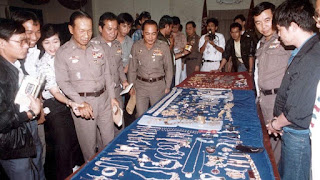
Dunque i poliziotti thailandesi arrivano con il prezioso carico ma al momento della restituzione le autorità saudite si accorgono non solo che gran parte delle pietre sono state sostituite con dei falsi, in più mancano molti gioielli e clamorosamente manca il diamante blu. Nel frattempo a Bangkok si diffondono voci, mai confermate, che ad un importante evento benefico molte delle signore presenti, mogli di alcuni dei componenti del governo, siano state viste indossare gioielli molto simili a quelli che mancano all'appello...si dice che ci fossero anche delle fotografie a provarlo. Queste voci alimentarono i sospetti della casa reale saudita ovvero che ad appropriarsi dei gioielli dopo l'arresto dell'autore del furto iniziale furono importanti funzionari della Polizia e VIP dell'alta società.
A questo punto le autorità saudite fanno i loro passi per poter recuperare i gioielli e indagare su quanto accaduto, dando incarico ai suoi funzionari diplomatici. Il 1 febbraio 1990 tre di loro vengono assassinati e successivamente il 12 febbraio sparisce Mohammad al-Ruwaili, un uomo d'affari che stava investigando di sua personale iniziativa.
A questo punto l'Arabia Saudita declassa le relazioni diplomatiche con il Regno di Thailandia ed invia un funzionario di polizia, Mohammed Said Khoja, come incaricato per recuperare i gioielli.
Khoja concentra la sua attenzione sul commerciante che aveva acquistato parte dei gioielli, Santi Sithanakan, perchè secondo lui è anche l'autore dei falsi e quindi sa a chi sono poi finiti gli originali. Per quanto riguarda gli omicidi dei diplomatici e dell'uomo daffari Khoja non entra nei dettagli ma afferma che tutti e quattro erano in qualche modo coinvolti nel tentativo di recuperare i gioielli, e sostiene che siano stati uccisi perché avevano "informazioni importanti". Intanto è stato ucciso anche un poliziotto thailandese. La polizia pero' ha negato che l'omicidio fosse collegato ai gioielli, ma ha promesso di intensificare le indagini. Nel 1991 a seguito delll'incessante pressione di Riyadh, la polizia thailandese quindi riapre il caso, trova miracolosamente alcuni dei gioielli e accusa per ricettazione quattro civili. Sono stati recuperati gioielli per un valore di 75.000 sterline, ma non il diamante blu.
Per protestare contro l'inazione sul caso, l'Arabia Saudita ritira il permesso di lavoro a più di 250.000 lavoratori thailandesi.
Kriangkrai Techamong, l'autore del furto, viene scarcerato nel 1994 dopo aver scontato due anni e sette mesi di carcere, ha avuto la grazia dal re che all'epoca è Rama IX.
Nell'agosto del 1994 Santi Sithanakan, il commerciante di gioielli, viene rapito e torturato dai poliziotti incaricati dal Tenente-Generale Chalor. Due settimane dopo, la moglie e il figlio quattordicenne di Santi Sithanakan, ora testimone principale del governo, sono trovati morti, insanguinati e picchiati, nella loro Mercedes fuori Bangkok. Gli agenti della polizia scientifica thailandese attribuiscono la morte a un incidente stradale, ma appare chiaro che sianostati uccisi. "Il comandante della polizia scientifica pensa che siamo stupidi", dice ai giornalisti il diplomatico saudita Khoja.
Il testimone, il gioielliere di Bangkok Santi Sithanakan, entra in clandestinità, si crede che abbia cercato di pagare un riscatto per la sua famiglia, ma ovviamente qualcosa è andato storto.
A settembre del 1994 due generali dei 18 ufficiali di polizia coinvolti vengono congedati. Nel 1995 il Tenente-Generale Chalor viene accusato di essere il mandante dell'omicidio della moglie e del figlio di Santi, dopo un processo durato 14 anni verrà condannato a morte e poi a 50 anni di carcere. Uscirà dal carcere nel 2012 amnistiato a causa delle sue condizioni di salute. Insieme a lui furono accusati e condannati altri quattro complici, sembra avessero chiesto al gioielliere un riscatto di 2.5 milioni di dollari.
Mentre è in prigione l'alto ufficiale di polizia crea anche un gruppo rock e produrrà una cover di Jailhouse Rock. Chalor si è sempre dichiarato innocente.
Nel 2004 il Dipartimento delle Investigazioni Speciali (DSI), che è sotto il Ministero della Giustizia, rileva le indagini sugli omicidi dei diplomatici sauditi, sostituendosi alla polizia.
A giugno del 2006 Chalor Kerdthes è condannato a 20 anni per aver rubato i gioielli recuperati, mentre altri sei agenti sono giudicati colpevoli.
A marzo del 2008 il ministro degli Esteri Noppadon dichiara l'intenzione della Thailandia di normalizzare le relazioni con l'Arabia Saudita, cosa che sarà possibile una volta chiuso il caso Blue Diamond. Due esperti musulmani, che hanno buoni rapporti con l'Arabia Saudita, sono nominati come consulenti degli investigatori del DSI incaricati del caso.
Ad aprile del 2008 il ministro della Giustizia thailandese Sompong Amornwiwat visita Chalor Kerdthes in carcere, pensando forse che potesse coinvolgere alcuni ex capi della polizia.
L'incaricato d'affari tailandese in Arabia Saudita, a gennaio del 2009, parla di "rinnovato sforzo" da parte del governo Abhisit per normalizzare le relazioni diplomatiche con l'Arabia Saudita risolvendo il caso del furto del Blue Diamond, l'omicidio dei tre diplomatici sauditi e il caso della scomparsa dell'uomo d'affari saudita nel 1990.
Ad agosto del 2009 la DSI accusa tale Abu Ali, di aver sparato a Abdullah AAl-Besri, il primo dei diplomatici ad essere ucciso il 1 febbraio del 1990.
L'Ufficio del Procuratore Generale (OAG) a gennaio del 2010 incrimina Somkid Boonthanom, capo della Regione 5 della polizia, più 4 agenti di polizia, alcuni ancora in attività, in relazione alla scomparsa dell'uomo di affari, Mohammad al-Ruwaili, presumibilmente deceduto nel 1990. Tutti e cinque gli accusati verranno assolti nel 2014 per insufficienza di prove. Questo ovviamente non ha contribuito a migliorare le relazioni diplomatiche tra i due paesi, anche perchè all'ultimo momento avvenne la sostituzione del giudice titolare. Come la maggior parte dei colpi di scena del caso Blue Diamond, la verità dietro gli omicidi non è ancora stata scoperta. I sauditi sono convinti che gli agenti di polizia thailandesi coinvolti nel furto siano responsabili anche degli omicidi. D'altra parte esiste un telegramma segreto americano inviato nel 2010 dove si suggerisce che gli omicidi potrebbero essere stati commessi in realtà da Hezbollah - questo pero' potrebbe non significare che le autorità thailandesi siano innocenti.
Nel 2016 è di nuovo Kriangkrai Techamong a riprendersi la scena, annunciando che sarebbe stato ordinato monaco e sarebbe rimasto in monastero per il resto della sua vita. All'età di 60 anni si dice convinto che quei gioielli portino sfortuna, nel corso degli anni ha avuto anche un gravissimo incidente stradale. Kriangkrai è sicuro che l'ordinazione possa salvare la sua vita e rendere merito allo spirito delle persone uccise in relazione al furto di gioielli. In realtà ha poi lasciato la vita monastica dopo tre anni, in quanto la sua famiglia era in difficoltà economiche.

Alla sua ordinazione ha partecipato anche l'ex Generale Chalor che ha voluto incontrare Kriangkrai al tempio per chiedere il suo perdono. Ormai 78enne semi-paralizzato seduto sulla sua sedia a rotelle Chalor ha affermato che non vedeva Kriangkrai da circa 25 anni e desiderava che quest'ultimo lo perdonasse per i reati commessi in passato contro di lui. Chalor ha detto anche di condividere la convinzione di Kriangkrai che i gioielli e le gemme saudite portino sfortuna a coloro che li possiedono senza esserne i loro legittimi proprietari.
Questa storia non ha un lieto fine. Il diamante blu non è stato ritrovato. Le relazioni diplomatiche sono ancora declassate e l'Arabia Saudita non concede permessi di lavoro ai cittadini thailandesi e addirittura pone limiti anche ai thai musulmani che vogliono recarsi in pellegrinaggio alla Mecca. Inoltre per legge l'Arabia Saudita vieta ai propri cittadini di recarsi in Thailandia per turismo e regolamenta con rigidità i permessi di chi debba viaggiarvi per lavoro.
Referenze:
https://en.wikipedia.org/wiki/Blue_Diamond_Affair
http://fabio-ilmiodiario.blogspot.com/2014/03/torna-laffare-del-diamante-blu-alte.html
http://fabio-ilmiodiario.blogspot.com/2011/10/blue-diamond-affair.html
http://altrimondi.gazzetta.it/2010/09/24/la_maledizione_del_diamante_bl/?refresh_ce-cp
https://www.vice.com/en_us/article/zm74k3/assassinations-curses-and-stolen-jewels-the-blue-diamond-affair-is-still-darkening-saudi-thai-relations
http://jotman.blogspot.com/2009/08/timeline-of-blue-diamond-affair.html
https://www.bangkokpost.com/thailand/general/901236/1989-blue-diamond-affair-burglar-becomes-monk
https://www.thedailybeast.com/the-blue-diamond-affair-the-jewel-heist-that-became-a-diplomatic-nightmare
https://www.khaosodenglish.com/news/crimecourtscalamity/2019/03/22/top-court-clears-cops-of-murder-in-saudi-blue-diamond-case/
https://www.bbc.com/news/world-asia-49824325
Esiste anche un podcast:
https://www.bangkokpodcast.com/bangkok-history-highlight-the-blue-diamond-affair-season-3-episode-35/
e un video animato con un riassunto della storia:
https://youtu.be/vzTTl_JOqUE
ENGLISH VERSION
Cold cases have a great charm and I often follow their development for years and in Italy of course there is no lack of materials. We can distinguish cold cases in different categories and for me the main ones are two: those solved and those still to be solved. In Thailand the cold case par excellence dates back to 1989, so intricate and full of twists that no screenwriter could have ever imagined and it's amazing how no one has ever made a television series or a movie.
The prologue of the story takes place in Saudi Arabia. Kriangkrai Techamong a Thai national works as a servant of Prince Faisal bin Fahd of the Saudi royal house and has access to his private rooms and, on June 20, 1989, steals some of his precious jewels including a famous 50-carat blue diamond. The loot is hidden in the vacuum cleaner bag to get them out of the palace and then Kriangkrai will ship them via DHL to his home in Lampang in northern Thailand. Following a rapid investigation by the Thai police, following indications from the Saudi authorities, on 10 January 1990 Kriangkrai was identified and arrested, recovering all the loot, some of which had already been sold to a jewellery dealer, Santi Sithanakan. The culprit was sentenced to seven years, then served three thanks to his cooperative attitude. In the meantime, Lieutenant-General Chalor's team flies to Saudi Arabia to return the jewels to their rightful owner. And at this point my 25 readers will be wondering, so where is all this? They've already solved everything! But we're just getting started.
So the Thai cops arrive with the precious cargo, but at the moment of the return the Saudi authorities realize not only that most of the stones have been replaced with fakes, but also that many jewels are missing and the blue diamond is missing. In the meantime, rumors are spreading in Bangkok, never confirmed, that at an important charity event many of the ladies present, wives of some of the members of the government, were seen wearing jewels very similar to those that are missing ... it is said that there were also photographs to prove it. These rumors fed the suspicions of the Saudi royal house that the jewels were appropriated after the arrest of the perpetrator of the initial theft by important police officers and VIPs of high society.
At this point, the Saudi authorities took steps to recover the jewels and investigate what happened, entrusting its diplomatic officials with the task. On February 1, 1990, three of them are assassinated and then on February 12, Mohammad al-Ruwaili, a businessman who was investigating on his own initiative, disappears.
At this point Saudi Arabia downgrades diplomatic relations with the Kingdom of Thailand and sends a police officer, Mohammed Said Khoja, as the person in charge of recovering the jewels.
Khoja focuses his attention on the merchant who had purchased part of the jewels, Santi Sithanakan, because according to him he is also the author of the fakes and therefore knows who the originals went to. As for the murders of the diplomats and the businessman Khoja doesn't go into details but says that all four of them were somehow involved in the attempt to recover the jewels, and claims that they were killed because they had important information". Meanwhile, a Thai policeman was also killed. The police denied that the murder was related to the jewels, but promised to intensify the investigation. In 1991, following Riyadh's relentless pressure, the Thai police then reopened the case, miraculously found some of the jewels and charged four civilians with fencing. Jewellery worth £75,000 was recovered, but not the blue diamond.
In protest against the inaction on the case, Saudi Arabia withdraws the work permit from more than 250,000 Thai workers.
Kriangkrai Techamong, the perpetrator of the robbery, was written up in 1994 after serving two years and seven months in prison and was pardoned by the king who was Rama IX at the time.
In August 1994, Santi Sithanakan, the jewellery merchant, was kidnapped and tortured by the policemen commissioned by Lieutenant-General Chalor. Two weeks later, Santi Sithanakan's wife and 14-year-old son, now the government's main witness, are found dead, bloodied and beaten, in their Mercedes outside Bangkok. Thai forensics officers attribute the death to a car accident, but it is clear that they were killed. "The forensic police chief thinks we're stupid," Saudi diplomat Khoja tells reporters.
The witness, Bangkok jeweller Santi Sithanakan, goes into hiding, believed to have tried to pay ransom for his family, but obviously something went wrong.
In September 1994, two generals of the 18 police officers involved were discharged. In 1995 Lieutenant-General Chalor is accused of being the instigator of the murder of Santi's wife and son, after a 14-year trial he is sentenced to death and then to 50 years in prison. He will be released from prison in 2012 amnestied because of his health condition. Together with him were accused and sentenced four other accomplices, it seems they had asked the jeweler for a ransom of 2.5 million dollars.
While in prison, the senior police officer also creates a rock band and will produce a cover of Jailhouse Rock. Chalor has always declared his innocence.
In 2004 the Department of Special Investigations (DSI), which is under the Ministry of Justice, takes over the investigation of the murders of Saudi diplomats, replacing the police.
In June 2006, Chalor Kerdthes was sentenced to 20 years for stealing the recovered jewellery, while six other agents were found guilty.
In March 2008, Foreign Minister Noppadon declared Thailand's intention to normalise relations with Saudi Arabia, which will be possible once the Blue Diamond case is closed. Two Muslim experts, who have good relations with Saudi Arabia, are appointed as consultants to the ISD investigators in charge of the cases.
In April 2008, Thai Minister of Justice Sompong Amornwiwat visited Chalor Kerdthes in prison, perhaps thinking that he might involve some former police chiefs.
The Thai businessman in charge of Thai affairs in Saudi Arabia, January 2009, speaks of a "renewed effort" by the Abhisit government to normalize diplomatic relations with Saudi Arabia by solving the case of the Blue Diamond theft, the murder of three Saudi diplomats and the case of the disappearance of a Saudi businessman in 1990.
In August 2009, the ISD accused Abu Ali of shooting Abdullah AAl-Besri, the first of the diplomats to be killed on February 1, 1990.
The Office of the Attorney General (OAG) in January 2010 indicted Somkid Boonthanom, head of Police Region 5, plus 4 police officers, some still active in connection with the disappearance of the businessman, Mohammad al-Ruwaili, who allegedly died in 1990. All five defendants will be acquitted in 2014 for lack of evidence. This has obviously not helped to improve diplomatic relations between the two countries, not least because at the last moment there is the replacement of the judge. Like most of the twists and turns in the Blue Diamond case, the truth behind the murders has not yet been discovered. The Saudis are convinced that the Thai police officers involved in the theft are also responsible for the murders. On the other hand, there is an American secret telegram sent in 2010 suggesting that the murders may actually have been committed by Hezbollah - this may not mean that the Thai authorities are innocent.
In 2016 it is again Kriangkrai Techamong who takes back the scene, announcing that he would be ordained a monk and remain in the monastery for the rest of his life. At the age of 60, he is said to be convinced that those jewels are bad luck, he also had a very serious car accident over the years. Kriangkrai says he is convinced that the ordination can save his life and give credit to the spirit of the people killed in connection with the theft of jewelry. He actually left the monastic life after three years because his family was in financial difficulties.
His ordination was also attended by former General Chalor who wanted to meet Kriangkrai at the temple to ask his forgiveness. Now 78 years old, semi-paralyzed, sitting in his wheelchair, Chalor said that he had not seen Kriangkrai in about 25 years and wanted him to forgive him for past crimes against him. Chalor also said he shared Kriangkrai's belief that Saudi jewelry and gems bring bad luck to those who own them but are not their rightful owners.
This story does not have a happy ending. The blue diamond has not been found. Diplomatic relations are still downgraded and Saudi Arabia does not grant work permits to Thai citizens and even places limits on Thai Muslims who want to make a pilgrimage to Mecca. Moreover, Saudi Arabia forbids its citizens to travel to Thailand for tourism and strictly regulates the permits of those who have to travel there on business.


