Visualizzazione post con etichetta Fantasmi. Mostra tutti i post

venerdì 23 agosto 2019

QUESTI FANTASMI - VITA QUOTIDIANA IN SIAM - CHIANG MAI - THESE GHOSTS - DAILY LIFE IN SIAM


[SCROLL DOWN FOR ENGLISH]

Il primo post dedicato ai fantasmi ha avuto un discreto successo. Torno quindi a raccontare altre storie su richiesta di alcune amiche. Questa volta focalizzando l'attenzione sulla città dove vivo, Chiang Mai. Ai suoi fantasmi contemporanei è dedicato un libro molto interessante "Ghosts of the new city - Spirits, urbanity and the ruins of progress in Chiang Mai" di Andrew Alan Jhonson, si tratta di un testo di etnografia sulla creazione di fantasmi come risultato della profonda crisi economica che nel 1997 colpì la Thailandia, creando una profonda ferita nello sviluppo di Chiang Mai. Non a caso la maggior parte dei luoghi che si ritengono infestati dai fantasmi sono quegli scheletri di cemento dei grandi condomini la cui costruzione non fu terminata a causa della crisi. Un aspetto interessante per me è che ora alcuni di questi edifici sono stati recuperati e portati a termine, immagino però non mancheranno prossimamente storie sui loro fantasmi che non si rassegneranno ad abbandonarli. Una caratteristica di questa generazione più giovane di fantasmi è che si tratta quasi sempre dei "morti male" ovvero di coloro che abbiano incontrato una brutta morte e i cui responsabili non siano stati perseguiti.

L'edificio più noto è sicuramente il Poi Luang Hotel, un magnifico 5 stelle, da 220 camere, l'ultimo piano caratterizzato dalla struttura circolare dalle grandi vetrate del ristorante girevole. Hotel che ha poi conosciuto un declino fino alla chiusura e la sua immensa ed inquietante mole in rovina fino ad oggi ha dominato la highway sottostante. Il 1 agosto di quest'anno sono iniziate le operazioni di demolizione in previsione della costruzione del secondo Ram Hospital della città. Il 25 luglio la proprietà ha fatto precedere l'inizio dei lavori da una cerimonia di benedizione e buon auspicio officiata da un gruppo di monaci locali.

Certamente i monaci avranno dovuto mettere in campo tutte le loro energie per garantire che tutti i fantasmi abbandonino questo sito. Sembra che diversi clienti paganti siano poi diventati residenti permanenti dell'hotel, avendo qui trovato la loro morte. Una volta decaduto e chiuso il palazzo venne venduto ad un consorzio medico che avviò dei lavori di ristrutturazione. Ma nel corso di un violento nubifragio una delle impalcature in bambù venne spazzata via e due operai morirono, aggiungendosi alla schiera delle anime residenti nell'edificio ormai in rovina. Poi con la crisi del 1997 il consorzio medico andò in fallimento e l'edificio rimase abbandonato divenendo rifugio di balordi. Tra questi ultimi a quanto si racconta si registrò anche un omicidio, allungando così la lista dei male morti all'interno dell'ormai ex hotel di lusso. 


Nel testo "Ghosts of the new city - Spirits, urbanity and the ruins of progress in Chiang Mai" di Andrew Alan Jhonson c'è un'immagine che trovo molto affascinante, scattata in quello che evidentemente era il garage dell'hotel in cui sono rimaste abbandonate delle vecchie auto. Insomma oltre ai fantasmi di essere umani anche auto fantasma vintage. Chiedo scusa per la pessima qualità dell'immagine ma è ripresa con il cellulare dalla pagina del libro.

Credits: Le informazioni prinicpali per questo post sono state prese dal già citato "Ghosts of the new city - Spirits, urbanity and the ruins of progress in Chiang Mai" di Andrew Alan Jhonson 
e da questo link: http://www.kendobson.asia/blog/haunted-chiang-mai

[ENGLISH VERSION]

The first post dedicated to ghosts was quite successful. So I'm going back to tell more stories at the request of some friends. This time focusing on the city where I live, Chiang Mai. A very interesting book "Ghosts of the new city - Spirits, urbanity and the ruins of progress in Chiang Mai" by Andrew Alan Jhonson is dedicated to his contemporary ghosts. It is an ethnographic text on the creation of ghosts as a result of the deep economic crisis that hit Thailand in 1997, creating a deep wound in the development of Chiang Mai. It is not a coincidence that most of the places that are believed to be infested by ghosts are those concrete skeletons of large condominiums whose construction was not completed because of the crisis. An interesting aspect for me is that now some of these buildings have been recovered and completed, but I guess there will soon be stories about their ghosts who will not resign themselves to abandon them. A characteristic of this younger generation of ghosts is that they are almost always the "bad deaths" or those who have met a bad death and whose offenders have not been prosecuted.
The most famous building is certainly the Poi Luang Hotel, a magnificent 5-star hotel with 220 rooms, the top floor characterized by the circular structure with large windows of the revolving restaurant. The hotel then experienced a decline until its closure and its immense and disturbing mass in ruins until today has dominated the highway below. On 1 August this year, demolition work began in order to build the city's second Ram Hospital. On 25 July the ownership preceded the start of work by a ceremony of blessing and good omen officiated by a group of local monks.

Certainly the monks will have had to put all their energy into ensuring that all the ghosts leave this site. It seems that several paying customers have since become permanent residents of the hotel, having found their death here. Once the building had fallen into disrepair and closed down, it was sold to a medical consortium that began renovation work. But during a violent storm one of the bamboo scaffoldings was swept away and two workers died, joining the ranks of souls living in the now ruined building. Then, with the 1997 crisis, the medical consortium went into bankruptcy and the building was abandoned and became a refuge for the fools. Among the latter, according to legend, there was also a murder, thus extending the list of evil deaths inside the now former luxury hotel.

In the text "Ghosts of the new city - Spirits, urbanity and the ruins of progress in Chiang Mai" by Andrew Alan Jhonson there is an image that I find very fascinating, taken in what was evidently the garage of the hotel where old cars were left abandoned. In short, in addition to the ghosts of being human, there are also vintage ghost cars. I apologize for the poor quality of the image but it is taken by mobile phone from the page of the book.

Credits: The main information for this post was taken from the already mentioned "Ghosts of the new city - Spirits, urbanity and the ruins of progress in Chiang Mai" by Andrew Alan Jhonson. and from this link: http://www.kendobson.asia/blog/haunted-chiang-mai

sabato 10 agosto 2019

QUESTI FANTASMI - VITA QUOTIDIANA IN SIAM - LA STORIA DI MAE NAK


[SCROLL DOWN FOR ENGLISH]
Vivendo in Thailandia prima o poi si avrà a che fare con i fantasmi che la abitano. La cultura religiosa locale è un buddismo di tipo Theravada ma ibridizzato con elementi animistici e induisti. Ogni thailandese è in grado di raccontarvi non solo le storie più famose che si tramandano da generazioni ma anche esperienze personali. Molti di loro però sono restii a rendervi partecipi dei loro racconti, perchè non si può parlare di fantasmi per gioco, si rischia in questo modo di evocarli. Ci sono anche dei giorni della settimana in cui non si deve prendere questo argomento e in particolare in occasione di qualsiasi festività dedicata a Buddha. 
In un post precedente ho dato alcune informazioni in merito alle Case degli Spiriti e di come quindi sia quotidiano e diffuso tale rapporto con i loro residenti. Ma i thai sono abituati anche alla narrazione di altri tipi di fantasmi, davvero terribili e crudeli, per lo più di sesso femminile. La più conosciuta e anche la più rappresentata in film e serie televisive è Mae Nak, il cui solo nome è in grado di suscitare spavento nei vostri interlocutori.  La storia inizia nel XVIII secolo, durante il regno di Re Mongkut. Nak era una bellissima donna e viveva in un villlaggio nella foresta. Da poco sposata con Mak, viveva in una delle tipiche case in legno affacciata su un canale, utilizzato anche come via di comunicazione. La loro vita viene descritta in modo bucolico come ogni vita di villaggio nella foresta. Finchè non giunse la chiamata alle armi per tutti gli uomini del villaggio, proprio quando Nak era incinta del primo figlio. Alla partenza Mak le promise che sarebbe tornato in tempo per vederlo nascere. Ma rimase ferito gravemente, venne curato in un monastero per lunghi mesi e non appena si sentì meglio iniziò a progettare il suo ritorno a casa. Uno dei monaci era veggente ed esorcista e lo esortò a rimanere nel monastero e prendere i voti, ma la proposta agli occhi di Mak apparve assurda e inaccettabile. Si affrettò così a tornare a casa dalla moglie e dal figlio che ormai era nato. Arrivando al villaggio verso sera  vide sua moglie con il bambino in braccio mentre come ogni giorno scrutava il fiume nella speranza di vederlo tornare. La casa era perfetta, sua moglie e suo figlio bellissimi...ma erano in realtà morti. Era accaduto infatti che la bella Nak non avesse superato il parto e anche il bambino non era sopravvissuto. Gli abitanti del villaggio avevano preso tutte le precauzioni per evitare che potessero tornare come revenant cucendo le loro bocche con degli aghi e seppellendoli lontano dal villaggio. Ma i loro sforzi furono vani. Ora Nak aveva fatto un incantesimo e il marito la vedeva bella e giovane come quando si erano lasciati e anche la casa era in buono stato e ben curata, ma in realtà ormai fatiscente e abbadonata. 
Nel frattempo Nak stava terrorizzando il villaggio uccidendo quanti riteneva responsabili della sua morte e chiunque si avvicinasse per avvisare il marito di quello che stava accadendo. Ma nonostante tutto fu poi lei stessa a tradirsi. Mentre preparava il pranzo non si accorse della presenza del marito e, quando un frutto cadde sotto al pavimento della capanna, per raccoglierlo allungò un braccio fino al livello inferiore. Immediatamente l'incantesimo fu rotto e l'uomo si accorse di quale fosse la realtà che lo circondava. Corse a rifugiarsi in un tempio vicino, infatti i fantasmi e i demoni non possono entrare negli edifici sacri. La furia di Nak allora travolse ancora una volta gli abitanti del villaggio, colpevoli di aver aiutato la fuga del marito. La situazione divenne così insostenibile che venne chiamato in causa un grande esorcista, questi pregando sulla tomba di Nak riuscì ad imprigionarne lo spirito in una giara che venne gettata in fondo al fiume. Purtroppo la soluzione fu solo temporanea. Alcuni pescatori, ignari di cosa fosse, casualmente recuperarono la giara e l'aprirono, liberando nuovamente lo spirito di Nak. Di fronte alla nuova ondata di violenza contro il villaggio un santo monaco decise di venire in soccorso degli abitanti. Fece riesumare i cadaveri della donna e di suo figlio. Lo spirito venne colto da una struggente nolstalgia alla vista del suo corpo e di quello del suo bambino e pianse. Iniziò poi un lungo colloquio con il monaco e in alcuni momenti i toni furono anche molto duri. Infine, grazie alla promessa che in una prossima reincarnazione lei e Mak sarebbero potuti essere felici insieme e anche a rituali particolari contro gli spiriti irati, il fantasma venne neutralizzato. Il monaco allora ordinò di togliere dall'osso frontale del cadavere un frammento ovoidale dove riteneva che risiedesse lo spirito, lo prese e lo avvolse in un pezzo di tela e lo legò alla sua cintura. Secondo i racconti popolari tale cintura passò di mano in mano, fino a giungere alla famiglia reale che ne sarebbe ora la depositaria e custode. 

A Bangkok le hanno anche dedicato un piccolo tempio, dove i fedeli offrono abiti eleganti e giocattoli, chiedendo protezione per la gravidanza o per il servizio di leva. Ovvero esattamente ciò che è mancato a lei e a suo marito. Il tempio ricostruisce gli spazi di una abitazione e di fronte ad un televisore sempre acceso è posta una statua di Mae Nak con un bambolotto che rappresenta suo figlio. Si ritiene che gli abiti eleganti e la televisione distraggano il suo fantasma dal portare ancora morte e distruzione e la stessa funzione hanno i giocattoli regalati al bambino. 

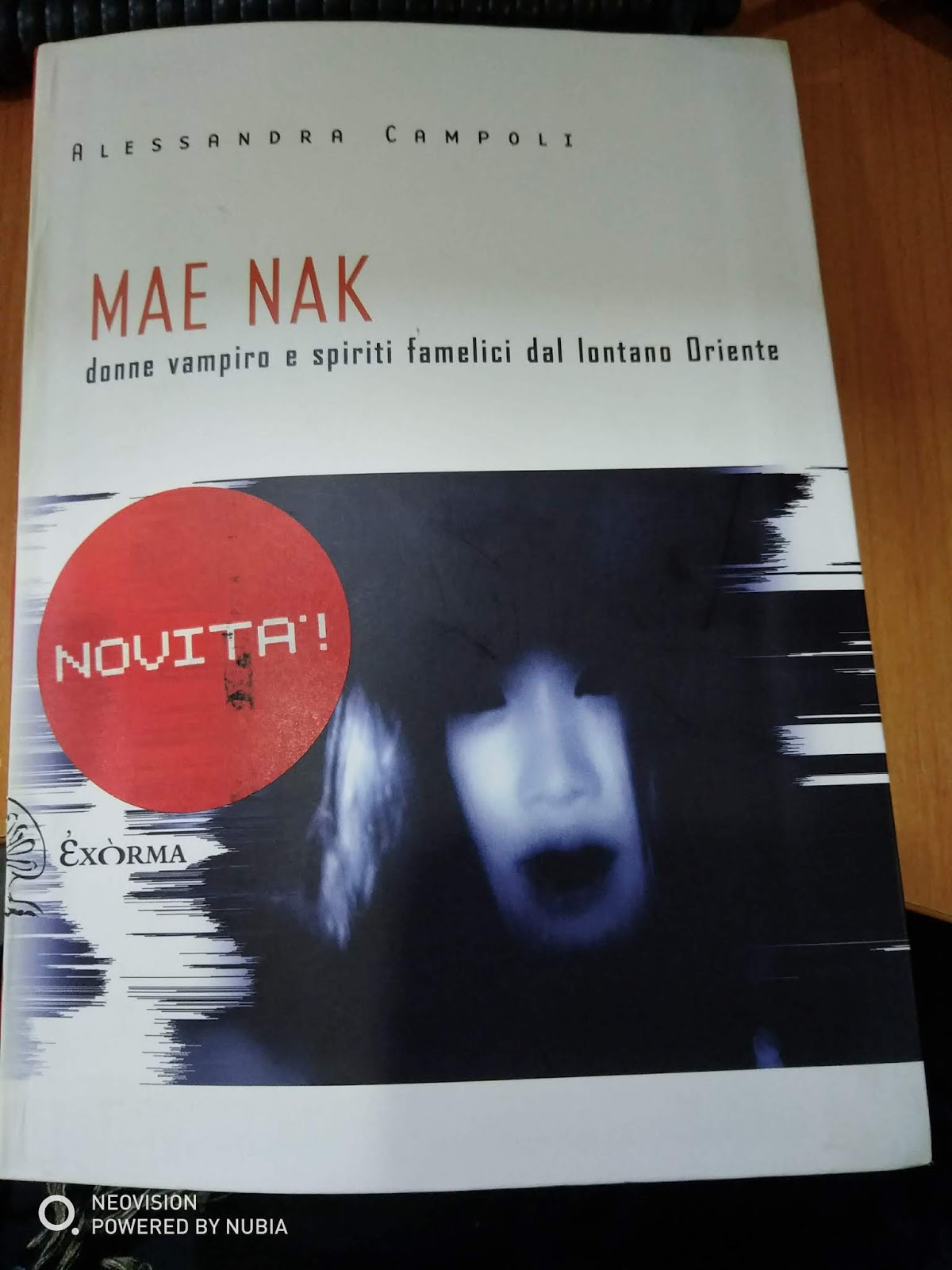
Evidentemente non ho foto mie per completare questo post e inserisco allora l'immagine di un piccolo e interessante libro in italiano, che anni fa trovai per puro caso in una libreria di Bologna, completamente fuori posto e lo considerai quasi un segno del destino. Se l'argomento sarà di vostro gradimento seguiranno altri post dedicati ad altre tipologie di fantasmi.
Alessandra Campoli, MAE NAK donne vampiro e spiriti famelici dal lontano Oriente, 2011

[ENGLISH VERSION]
If you live in Thailand, you will sooner or later have to deal with the ghosts who live there. The local religious culture is a Theravada-type Buddhism but hybridized with animistic and Hindu elements. Every Thai is able to tell you not only the most famous stories that have been handed down from generation to generation but also personal experiences. Many of them, however, are reluctant to share their stories with you, because you can not talk about ghosts for fun, you risk this evoking them. There are also days of the week when this topic should not be taken up and in particular on the occasion of any holiday dedicated to Buddha. 
In a previous post I gave some information about the Houses of Spirits and how it is therefore daily and widespread this relationship with their residents. But the Thai are also accustomed to the narration of other types of ghosts, really terrible and cruel, mostly female. The best known and also the most represented in films and television series is Mae Nak, whose only name is able to arouse fear in your interlocutors.  The story begins in the 18th century, during the reign of King Mongkut. Nak was a beautiful woman and lived in a cottage in the forest. Recently married to Mak, she lived in one of the typical wooden houses overlooking a canal, also used as a means of communication. Their life is described in a bucolic way as every village life in the forest. Until the call to the army arrived for all the men of the village, just when Nak was pregnant with his first child. When she left, Mak promised that he would be back in time to see him born. But he was seriously injured, was being cared and treated in a monastery for long months and as soon as he felt better he began to plan his return home. One of the monks was a clairvoyant and exorcist and urged him to stay in the monastery and take his vows, but the proposal in Mak's eyes seemed absurd and unacceptable. He hastened to return home to his wife and child, who had been born by then. Arriving at the village in the evening he saw his wife with the child in her arms as she watched the river as every day in the hope of seeing him return. The house was perfect, his wife and son beautiful ... but they were actually dead. It had happened that the beautiful Nak had not passed the birth and even the child had not survived. The villagers had taken every precaution to prevent them from returning like revenants by sewing their mouths with needles and burying them far from the village. But their efforts were in vain. Now Nak had done a spell and her husband saw her as beautiful and young as when they left and also the house was in good condition and well cared for, but in reality now dilapidated and subscribed. 
Meanwhile, Nak was terrorizing the village by killing all those he held responsible for his death and anyone who approached him to warn his husband of what was happening. But in spite of everything it was she who betrayed herself. While preparing lunch, she did not notice her husband's presence and, when a fruit fell under the floor of the hut, she stretched her arm to the lower level to pick it up. Immediately the spell was broken and the man noticed the reality around him. He ran to take refuge in a nearby temple, for ghosts and demons cannot enter sacred buildings. Nak's fury then overwhelmed once again the villagers, who were guilty of helping their husband escape. The situation became so unsustainable that a great exorcist was called into question, he praying at the tomb of Nak managed to imprison the spirit in a jar that was thrown at the bottom of the river. Unfortunately, the solution was only temporary. Some fishermen, unaware of what it was, accidentally recovered the jar and opened it, releasing again the spirit of Nak. Faced with the new wave of violence against the village, a holy monk decided to come to the aid of the inhabitants. He had the bodies of the woman and her son exhumed. The spirit was seized by a yearning nostalgia at the sight of his body and that of his child and cried. He then began a long conversation with the monk and in some moments the tones were also very hard. Finally, thanks to the promise that in an upcoming reincarnation she and Mak could be happy together and also to particular rituals against the ghost spirits, the ghost was neutralized. The monk then ordered to remove an oval fragment from the front bone of the corpse where he believed the spirit resided, took it and wrapped it in a piece of cloth and tied it to his belt. According to popular accounts, the belt passed from hand to hand, until it reached the royal family, which would now be its custodian and guardian. 

In Bangkok they also dedicated a small temple to her, where the faithful offer elegant clothes and toys, asking for protection for pregnancy or for military service. That's exactly what she and her husband missed. The temple reconstructs the spaces of a house and in front of a television always on there is a statue of Mae Nak with a doll representing her son. It is believed that the elegant clothes and television distract her ghost from bringing more death and destruction and the same function have the toys given to the child. 

Obviously I don't have any photos to complete this post and so I insert the image of a small and interesting book in Italian, which years ago I found by pure coincidence in a bookshop in Bologna, completely out of place and I considered it almost a sign of fate.

MONACHESIMO FEMMINILE: LA GOCCIA CHE SCAVA LA ROCCIA - FEMININE MONASTICISM: THE DROP THAT HOLDS THE ROCK

  [SCROLL FOR ENGLISH] In Thailandia le bikkhhuni esistono e stanno crescendo. Il turista medio occidentale quando immagina o ricorda un vi...